




Introduction
Close to half a million people seek medical treatment for burns in the United States every year, and the great majority of burns happen at home, in the kitchen, or on the job. Most are minor and heal on their own. The hard part for anyone standing over a fresh burn is knowing which kind they are looking at, whether it needs a doctor, and how long it will take to heal. This guide walks through all of that: what first, second, third and fourth degree burns look like, the stages a burn moves through as it heals, the first aid that protects the skin while it recovers, and the specific warning signs that mean it is time to get help.
Burn Degrees at a Glance
Burns are classified by how deep they reach into the skin. Depth is what determines appearance, pain, healing time and whether the burn needs professional care. Use this table to place a burn quickly, then read the section that matches.
| Degree | How deep | What it looks like | Typical healing |
| First degree | Outer layer only | Red, dry, no blisters, painful to touch | 3 to 7 days, no scarring |
| Second degree | Outer and second layer | Blisters, wet and shiny, red or splotchy, swollen | 2 to 3 weeks or more |
| Third degree | Full thickness | White, brown or charred, leathery, little or no pain | Needs medical care, often grafting |
| Fourth degree | Below the skin | Extends to fat, muscle or bone, blackened | Emergency, surgical |
The two degrees most people deal with at home are first and second. The difference between them decides almost everything about how you treat the burn, so it is worth getting right.
First-Degree Burns: What They Look Like and How to Treat Them
A first-degree burn affects only the outermost layer of skin, the epidermis. The skin turns red, feels dry and tender, and there are no blisters. A mild sunburn is the most common example. It hurts, but it is a surface injury and it heals on its own.
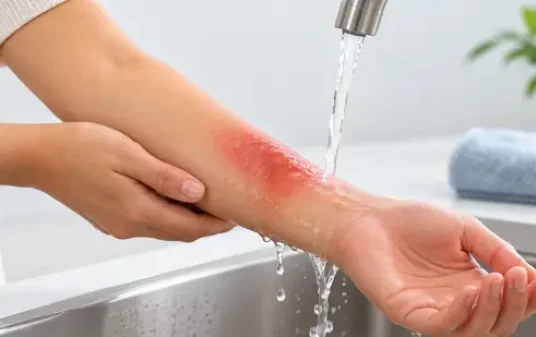
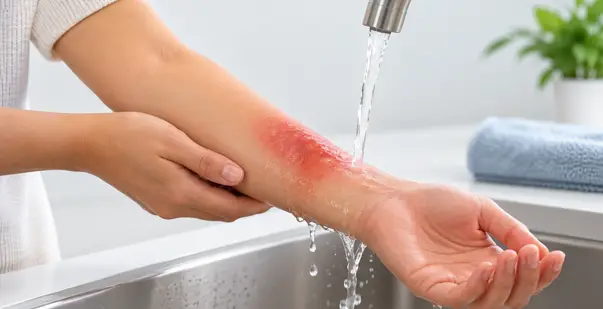
To treat a first-degree burn, cool it under clean, cool (not ice cold) running water for 10 to 20 minutes, then leave it uncovered or protect it with a loose, non-stick dressing. A fragrance-free moisturizer or aloe helps with the tightness. Over-the-counter pain relief is usually enough. Most first-degree burns fade within a week and do not scar. Do not apply ice, butter, toothpaste or oil, all of which trap heat or raise the risk of infection.
Second-Degree Burns: What They Look Like
A second-degree burn, also called a partial-thickness burn, reaches through the epidermis into the second layer of skin, the dermis. The signs are distinctive: blisters, a wet or shiny surface, skin that looks red or blotchy, swelling, and pain that is often more intense than a deeper burn because the nerve endings are still alive and exposed. Scalds from hot liquids and steam are a frequent cause.
Because a second-degree burn damages living tissue, it takes longer to heal and needs more careful aftercare than a first-degree burn.
Second-Degree Burn Healing Stages and Timeline
This is the question most people arrive with: how long does it take, and what should it look like along the way. A second-degree burn generally heals in two to three weeks, though larger or deeper ones take longer. Healing moves through recognizable stages.
Stage 1: Inflammation (days 1 to 3)
The burn is red, swollen and painful, and blisters form as fluid collects under the damaged skin. This is the body sealing the wound and sending blood and immune cells to the area. Blisters are a protective barrier, so leave them intact.
Stage 2: New tissue and regeneration (days 3 to 14)
The redness starts to settle, blisters may drain or reabsorb, and new pink skin forms underneath. Itching is common and normal at this stage. Keep the area moist and covered so the new skin does not dry out and crack.
Stage 3: Remodeling (week 2 onward)
The new skin thickens and strengthens. Fresh skin can look pink, red or slightly discolored for weeks to months as it matures. Protecting it from the sun during this window is the single best thing you can do to limit lasting discoloration.
A burn that has not improved after two weeks, or that looks worse rather than better, should be seen by a clinician. Slow healing can signal a deeper burn or an infection.
Treating Burns by Severity: The First Response
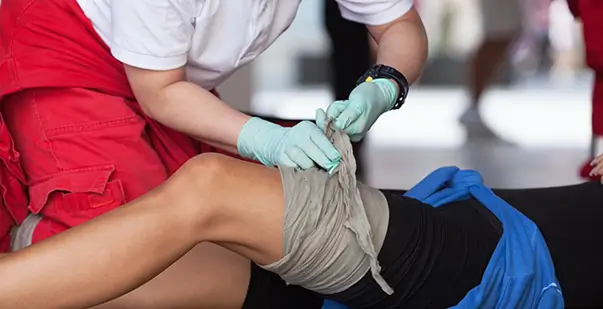
For any minor burn, the first minutes matter most. Cool the burn under cool running water for 10 to 20 minutes as soon as possible. Remove rings, watches and tight clothing near the burn before it swells. Once cooled, cover it loosely with a sterile, non-stick dressing or clean cling film. Do not break blisters, and do not apply ice, greasy ointments or home remedies. Over-the-counter pain relievers manage the discomfort.
Deeper or larger burns are different. A second-degree burn wider than three inches, or any burn on the face, hands, feet, genitals or over a major joint, should be treated as significant and seen by a professional. Third and fourth degree burns are medical emergencies and are covered below. Knowing where that line sits, and being able to act calmly in the first minute, is exactly what an online first aid certification builds.
Scald and Hot Water Burns
Scalds are burns caused by hot liquids or steam rather than flame, and they are one of the most common burns at home, especially among young children and older adults. A hot water burn is usually a first or second degree burn depending on the temperature of the liquid and how long it stayed on the skin. Boiling water or hot oil can cause a deep second-degree burn in seconds.
Treat a scald the same way you treat any thermal burn: get the source away from the skin, remove soaked clothing unless it is stuck to the burn, and cool the area under cool running water for 10 to 20 minutes. Because scalds often cover a wider area than they first appear, watch for spreading redness and blistering over the following hours, and seek care for any scald that blisters widely or affects a child.
Third and Fourth Degree Burns: When It Is an Emergency
A third-degree burn destroys the full thickness of the skin. It can look white, brown, yellow or charred and leathery, and it may be strangely painless in the center because the nerve endings have been destroyed. A fourth-degree burn reaches deeper still, into fat, muscle or bone. Both are medical emergencies. Call 911, do not remove clothing stuck to the burn, do not immerse a large burn in water, and cover the person loosely with a clean sheet to preserve body heat until help arrives. If the person stops breathing, begin CPR.
When to Seek Medical Care
Cool water and a clean dressing handle most minor burns. Get professional care when any of the following is true:
- The burn is larger than three inches or wraps around a limb.
- It sits on the face, hands, feet, genitals or a major joint.
- It looks white, leathery or charred, or the skin is broken over a wide area.
- It was caused by chemicals or electricity.
- Signs of infection appear: increasing pain, redness spreading outward, swelling, oozing or fever.
- The person is a young child, an older adult, or has a condition such as diabetes that slows healing.
Aftercare, Scarring and Infection Prevention
How a burn is cared for while it heals determines whether it scars. Keep the wound clean and moist, change dressings as directed, and resist picking at blisters or peeling skin. A thin layer of a plain antibiotic ointment on broken skin, under a non-stick dressing, keeps the surface from drying out. Once new skin has formed, sunscreen over the area for the next several months is the most effective way to prevent the fresh skin from darkening. Watch for the infection signs above throughout, since infection is the most common complication of an otherwise minor burn.
Be Ready Before the Next Burn
Burns rarely happen when it is convenient, and the first minute is usually handled by whoever is closest, not a professional. Knowing how to judge a burn, cooling it correctly and recognizing the point where it needs a doctor turns a frightening moment into a manageable one. American Healthcare Academy’s online first aid certification covers burn care alongside bleeding, choking and other everyday emergencies, so you are prepared before you need to be.
Get first aid certified online
FAQs
1. How long does it take for a second degree burn to heal?
Most second-degree burns heal within two to three weeks, though larger or deeper ones can take a month or more. Healing moves through stages: inflammation and blistering in the first few days, new pink skin forming over the next one to two weeks, then a longer remodeling phase where the fresh skin thickens and any discoloration slowly fades. Keeping the burn clean, moist and covered speeds recovery and lowers the risk of scarring. A burn that has not improved after two weeks, or that looks worse, should be seen by a clinician, since slow healing can signal a deeper burn or infection.
2. What are the healing stages of a second degree burn?
A second-degree burn heals in three overlapping stages. First is inflammation, roughly days one to three, when the burn is red, swollen and blistered as the body seals the wound. Second is regeneration, about days three to fourteen, when blisters settle and new pink skin forms underneath, often with itching. Third is remodeling, from around week two onward, when the new skin thickens and strengthens and any pink or red discoloration gradually matures. Protecting the area from the sun during remodeling is the best way to limit lasting color change. Leave blisters intact throughout, since they protect the healing skin.
3. How do you tell the difference between a first and second degree burn?
The clearest sign is blistering. A first-degree burn affects only the top layer of skin and looks red and dry with no blisters, much like a mild sunburn, and it heals in under a week. A second-degree burn reaches the second layer of skin and produces blisters, a wet or shiny surface, swelling and often sharper pain because the nerve endings are exposed. It also takes far longer to heal, usually two to three weeks. If the skin has blistered or looks wet and raw, treat it as a second-degree burn and follow the more careful aftercare steps.
4. Is a hot water burn a first or second degree burn?
It can be either, depending on how hot the liquid was and how long it stayed on the skin. A brief splash of warm water may cause only a red, painless first-degree burn, while boiling water or hot oil can cause a blistering second-degree burn in seconds. Because scalds often spread across a wider area than they first appear, cool the burn under cool running water for 10 to 20 minutes and watch it over the next few hours. If it blisters widely, covers a large area, or affects a young child or older adult, treat it as a serious burn and seek medical care.
5. What should you not put on a burn?
Skip the old home remedies. Do not apply ice or ice-cold water, which can deepen the injury by damaging tissue. Do not use butter, oil, toothpaste, egg white or similar remedies, which trap heat and raise the risk of infection. Do not break blisters, since intact blisters protect the new skin forming underneath. Avoid fluffy cotton wool or adhesive bandages placed directly on the burn, which can stick to the wound. Instead, cool the burn with cool running water, cover it loosely with a sterile non-stick dressing or clean cling film, and use over-the-counter pain relief as needed.
6. When should a burn be treated by a doctor?
Seek professional care for any burn larger than about three inches, any burn that wraps around a limb, and any burn on the face, hands, feet, genitals or a major joint. Burns that look white, leathery or charred, or that were caused by chemicals or electricity, need medical attention regardless of size. Watch for infection in the days after: spreading redness, increasing pain, swelling, oozing or fever all warrant a visit. Young children, older adults and people with conditions such as diabetes should be seen sooner, since they heal more slowly and are more prone to complications. When in doubt, have it checked.