Bing Ads

PALS Certification & Recertification Online Training Outline

CE Credits Validity Cost Duration ECC Exam Attempts Wallet Card
4.0 2 Years $119.00 1-2 Hrs Compliant Unlimited Download/Print/Mail
CE Credits Validity Cost Duration ECC Exam Attempts Wallet Card
4.0 2 Years $119.00 1-2 Hrs Compliant Unlimited Download/Print/Mail

Course Overview & Learning Outcomes

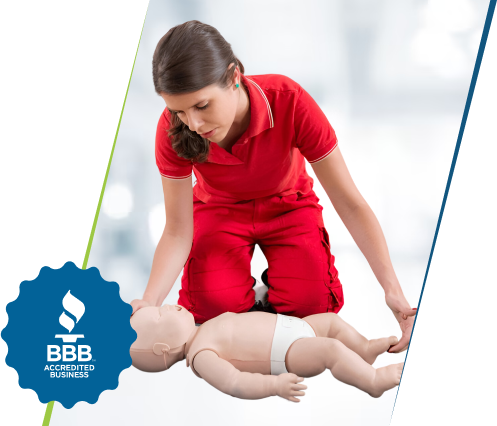
Illustration for pals classes online

Our PALS certification and recertification course builds the pediatric advanced life support skills that emergency and pediatric care providers are expected to have. Here is what the course covers:

  • Recognize Pediatric Emergencies Identify the early clinical signs and symptoms that distinguish a pediatric patient in respiratory distress, circulatory failure, or cardiovascular compromise from a stable child, so your intervention begins before the situation deteriorates further.
  • Perform High-Quality CPR Learn compression depth, rate, and ratio techniques specific to infants and children, including the two-finger and two-thumb-encircling methods for infants, so your CPR delivers effective perfusion for each age group.
  • Manage Breathing Problems Assess and manage respiratory distress and failure in pediatric patients using appropriate oxygen delivery, airway positioning, bag-mask ventilation, and advanced airway techniques matched to the child’s age and size.
  • Follow Advanced Life Support Guidelines Apply PALS pharmacology protocols, interpret pediatric ECG rhythms, and operate defibrillators and cardioverters correctly, all following current ECC-aligned pediatric advanced life support standards.
  • Work as a Team Apply structured team roles, closed-loop communication, and clear leadership during pediatric resuscitation scenarios so your team coordinates quickly and decisively under pressure.
  • Care After Resuscitation Implement post-resuscitation care protocols: stabilize hemodynamics, optimize ventilation, manage fever and glucose, and arrange definitive care to protect the child’s neurological outcomes after a cardiac event.
Start Now

Trusted By 35,000+ Businesses & Brands

35,000+ Businesses & Brands Trust Us

Ready to Save a Child’s Life?

Join our PALS course and learn lifesaving skills step-by-step!

How Do Online PALS Certification & Recertification Classes Work? 

First Work Icon1 representing HIPAA Training Online: Get Certified now for Healthcare Workers

Self-Paced Online Learning

Complete the PALS course modules on your own schedule, pausing and resuming between clinical shifts as needed. The self-paced format lets you spend extra time on pediatric rhythm recognition or pharmacology before moving forward.

First Work Icon2 representing HIPAA Training Online: Get Certified now for Healthcare Workers

Interactive Assessments and Immediate Feedback

Case-based quizzes and immediate feedback identify gaps in your knowledge of pediatric assessment, respiratory management, and shock recognition before you advance, so you arrive at the final exam confident and prepared.

First Work Icon3 representing HIPAA Training Online: Get Certified now for Healthcare Workers

Download the Certification

After passing the final exam, your PALS certification is available for immediate digital download. Print it for your employer, save it for your credentialing file, or forward it directly to your institution.

Benefits of PALS Certification and Recertification.

  • Enhanced Knowledge and Skills
  • Improved Patient Outcomes
  • Career Advancement Opportunities
  • Increased Confidence and Preparedness
  • Flexibility and Convenience of Online Recertification
  • Cost and Time Efficiency

What is Included in PALS Certification & Recertification Course?

Introduction Icon1 representing ACLS Recertification

Systematic Pediatric Assessment

Train in the PALS systematic approach to pediatric assessment: evaluate appearance, breathing, and circulation to identify life-threatening respiratory, circulatory, or cardiovascular compromise requiring immediate intervention.

Introduction Icon2 representing First Aid Certification Online

Management of Respiratory Emergencies

Recognize and treat the full spectrum of pediatric respiratory emergencies, from mild distress to failure and arrest, using age-appropriate airway management, supplemental oxygen, and bag-mask ventilation techniques.

Introduction Icon3 representing ACLS Recertification

Recognition and Treatment of Shock

Differentiate hypovolemic, distributive, cardiogenic, and obstructive shock in pediatric patients, and apply the correct PALS resuscitation algorithm and fluid management strategy to restore adequate perfusion for each type.

Plas Work Icon4 representing pals classes online

Cardiac Arrest and Arrhythmia Management

Recognize and manage pediatric cardiac arrest and arrhythmias using correct PALS algorithms, including defibrillation for shockable rhythms, synchronized cardioversion for unstable tachyarrhythmias, and pacing for symptomatic bradycardia.

Who Should Consider PALS Certification & Recertification?

PALS certification is required or strongly recommended for any healthcare provider who may encounter or lead the response to a pediatric emergency, including:

Pediatricians and Pediatric Nurses

Pediatricians and pediatric nurses are the most common holders of PALS certification. Most pediatric inpatient and emergency roles require a current PALS credential for employment and credentialing.

Emergency Room Doctors and Nurses

Emergency physicians and nurses encounter pediatric patients across all severity levels. Current PALS certification is a standard credentialing requirement for emergency department roles at hospitals that treat children.

Paramedics and Emergency Medical Technicians (EMTs)

Paramedics and advanced EMTs apply PALS skills in the prehospital environment, where the response window is critical. Field management of pediatric cardiac arrest, respiratory failure, and shock directly affects outcomes.

ICU and Critical Care Nurses

PICU and critical care nurses manage the highest-acuity pediatric patients. PALS certification is a standard credentialing requirement for intensive care nursing roles in facilities that admit children.

Anesthesiologists

Pediatric anesthesiologists and CRNAs manage cardiovascular and respiratory stability during procedures on children. PALS certification is a baseline expectation for any anesthesia role covering pediatric cases.

Respiratory Therapists

Respiratory therapists provide critical airway and ventilation support during pediatric resuscitation. PALS training prepares them to apply the correct ventilation strategy and participate effectively in team-based pediatric codes.

Medical Students and Residents

Medical students and residents entering pediatric or emergency rotations are increasingly expected to hold PALS certification before beginning high-acuity clinical placements in facilities that treat children.

Family and General Practitioners

Family physicians and general practitioners see children across all ages in primary care. PALS training prepares them to recognize deterioration and stabilize a pediatric patient until specialized emergency care arrives.

School Nurses and Healthcare Providers in Schools

School nurses are often first responders when a child experiences a medical emergency. PALS certification gives them the pediatric-specific assessment and response skills that standard adult-focused training does not cover.

Ready to Save a Child’s Life?

Join our PALS course and learn lifesaving skills step-by-step!

HIPAA Certification That’s Fast, Affordable, and Recognized

Meet federal requirements and protect patient data online.

Master CPR and First Aid in One Course

Learn to handle heart stops, cuts, and emergencies—start today online.

ACLS Renewal? Skip Class—Do It All Online

Save time, money, and stress with instant ACLS recertification.

Need a Quick PALS Recertification?

Refresh your skills with easy flexible and accessible training designed for you

Why Choose Our Online PALS Certification & Recertification Course?

If you want to improve your pediatric emergency response skills in a simple and effective way, here are some great reasons to join our online PALS Certification & Recertification course.

100% Online, Study Anytime
Complete your PALS certification or recertification from any device, at any time, with no fixed schedule or in-person requirement. Access every module and practice scenario when it fits between your clinical shifts.
Fast Certification & Instant Card
Pass the exam and download your PALS certification immediately, with no processing delay. For last-minute credentialing requirements or upcoming employment start dates, same-day certification is available the moment you pass and pay.
Accepted Nationally by Employers
Our PALS course follows AHA/ECC aligned guidelines and is accepted by hospitals, pediatric clinics, and healthcare organizations across the United States for employment credentialing and continuing education purposes.
Designed by Certified Professionals
PALS course content is developed by certified medical experts and updated to reflect current ECC-aligned pediatric advanced life support guidelines, ensuring the clinical algorithms and scenarios reflect real-world pediatric emergency practice.
Free Retake Until You Pass
If you do not pass the exam on your first attempt, you can retake it at no extra cost. Review the course materials between attempts until you reach the passing score with full confidence.

How to Get PALS Certification & Recertification Online? 

To obtain or renew your PALS certification online, follow these easy steps:

Step1 for HIPAA Training Online: Get Certified now for Healthcare Workers course Step1 Mob for ACLS Recertification course

Enroll in our online PALS course

Register for the Pediatric Advanced Life Support program through our website.

Step2 for HIPAA Training Online: Get Certified now for Healthcare Workers course Step2 Mob for HIPAA Training Online: Get Certified now for Healthcare Workers course

Access study materials

Utilize the provided digital resources, including manuals and videos, to prepare for the exam.

Step3 for HIPAA Training Online: Get Certified now for Healthcare Workers course Step3 Mob for HIPAA Training Online: Get Certified now for Healthcare Workers course

Complete the course modules

Progress through the interactive lessons at your own pace, ensuring comprehensive understanding.

Step4 for HIPAA Training Online: Get Certified now for Healthcare Workers course Step4 Mob for HIPAA Training Online: Get Certified now for Healthcare Workers course

Pass the online exam

Achieve a minimum score of 80% on the test; you have up to three attempts to succeed.

Desktop05 Mobile05

Receive your certification

Immediately download and print your digital provider card upon passing the exam.

What Is PALS Certification and How Does It Differ from BLS and ACLS?

PALS stands for Pediatric Advanced Life Support, and it is the advanced emergency credential specifically designed for healthcare providers who respond to critically ill or injured children and infants. Where BLS (Basic Life Support) teaches the foundational skills of CPR, AED use, and airway management for patients of all ages, PALS goes significantly further in the pediatric-specific direction: systematic pediatric assessment, respiratory distress and failure recognition, shock identification and management, pediatric arrhythmia interpretation, and post-resuscitation care. These are clinical skills that general BLS training does not cover and that providers who work in pediatric or emergency settings are expected to apply with confidence.

The distinction between PALS and ACLS (Advanced Cardiovascular Life Support) is equally important. ACLS focuses on adult cardiac emergencies, including adult rhythm interpretation, pharmacology for adult patients, and management of acute coronary syndrome and stroke. PALS is built around the different physiology, different drug doses, and different assessment approach that pediatric patients require. Many providers hold both: ACLS covers the adult patients in their practice, while PALS covers the children. If you work in a setting that sees patients of mixed ages, such as an emergency department or a transport service, holding both certifications is the standard expectation. For questions about which combination of certifications your specific role requires, contact our support team at 1-888-277-7865 or review our healthcare provider certification options.

American Health Care Academy PALS and AHA/ECC Alignment

American Health Care Academy is an independent online training provider. Our PALS certification and recertification curriculum is developed in accordance with the guidelines published by the American Heart Association (AHA) and the Emergency Cardiovascular Care (ECC) committee, which set the current science-based standards for pediatric advanced life support. Being clear about the distinction: American Health Care Academy is not the American Heart Association, and our certifications are not AHA-issued cards.

For most pediatric departments, children’s hospitals, outpatient clinics, and emergency services, an AHCA PALS certification meets the stated requirement for current, guideline-based PALS training. Our course is ECC compliant, accredited, and accepted by healthcare organizations nationwide. However, certain hospital systems, fellowship programs, or state licensing bodies specifically require an AHA-issued PALS card. This distinction is most likely to apply in academic medical centers, pediatric fellowships, and programs with explicit provider credentialing specifications. If you are unsure whether your institution will accept our PALS certification, confirm with your employer or credentialing office before enrolling. See our acceptance checker or call 1-888-277-7865 and our team will help you verify.

4.8
Shopper-approved-logo 248,777 reviews with 4.8 stars 248,777 reviews with 4.8 stars
Sign Up Now

Frequently Asked Questions

Q. What is PALS certification and who should get it?
PALS stands for Pediatric Advanced Life Support. It is the advanced emergency training credential designed for healthcare providers who respond to critically ill or injured children and infants. Where BLS covers foundational CPR for all ages, PALS adds pediatric-specific systematic assessment, respiratory and circulatory emergency management, arrhythmia interpretation, and post-resuscitation care, skills that general BLS training does not include. PALS certification is required or strongly recommended for pediatricians, pediatric nurses, emergency physicians, paramedics, PICU staff, and any provider who may encounter and lead the response to a pediatric emergency in a clinical or prehospital setting.
Q. Do I need PALS if I already have BLS certification?
Yes. BLS and PALS are complementary credentials that cover very different levels of care. BLS (Basic Life Support) teaches foundational CPR, AED use, and airway management for patients of all ages, and it is the entry-level emergency credential most healthcare roles require. PALS (Pediatric Advanced Life Support) goes significantly further in the pediatric direction, adding systematic pediatric assessment, shock and arrhythmia recognition, pediatric pharmacology, and post-resuscitation protocols specific to children and infants. If you work in pediatric care, emergency medicine, or any setting where children are patients, PALS provides the advanced clinical tools that BLS does not cover.
Q. How long does it take to complete the PALS certification course?
The PALS certification and recertification course is designed to be completed in one to two hours of focused study time, though the self-paced format means you can take as long as you need. The course is fully online with no fixed schedule, so you can spread the modules across multiple sessions if that fits your work schedule better. Progress saves automatically, so stopping and picking back up later does not cost you any completed material. Most learners who set aside a focused block find they can complete the modules and exam attempt in a single sitting.
Q. Is there a written exam at the end of the PALS course?
Yes. A written exam is required to earn your PALS certification. You must pass the final assessment before your certificate is issued. The exam tests your knowledge of the clinical concepts covered in the course, including pediatric assessment, respiratory and circulatory emergency management, arrhythmia recognition, and resuscitation pharmacology. You need to achieve a passing score to receive your certification. The course materials and practice tests remain available to you throughout your enrollment window so you can review any areas where you feel less confident before sitting the final exam.
Q. How long is a PALS certification valid?
A PALS certification from American Health Care Academy is valid for two years from the date you pass the final exam. After two years, you must complete PALS recertification to maintain your credential. Most pediatric departments, emergency services, and clinical programs that require current PALS credentials verify validity during annual staff credentialing reviews. We recommend beginning the recertification process before your certification expires so your PALS coverage remains uninterrupted. A lapsed credential can affect employment eligibility and clinical placement, particularly in pediatric-facing roles where current certification is a non-negotiable condition of work.
Q. When will I receive my PALS certification wallet card?
After you pass the PALS exam and complete payment, your digital PALS certification is available for immediate download from your account dashboard. There is no processing delay: the certificate is ready as soon as your passing score is confirmed and payment clears. Print it for your employer, save a digital copy for your credentialing file, or forward it directly to your hospital's HR or credentialing department. If you also want a physical wallet card, it is mailed to your registered address within 5 to 7 business days after payment is confirmed.
Q. Is the AHCA PALS certificate printable?
Yes. Your PALS certification from American Health Care Academy is available as a high-resolution digital download that you can print on standard letter-size paper or save as a PDF for your records. Once you pass the exam and complete payment, go to your account dashboard and select Verify and Download to access your certificate immediately. The printed certificate includes the course instructor's signature and an embossed seal, along with your full name, certification date, PALS credential details, and course information needed for employer or credentialing body verification. You can print multiple copies and re-download at any time during your two-year validity period.
Q. What is the validity period for AHCA certifications?
American Health Care Academy certifications are generally valid for two years from the date of successful completion. This two-year validity applies to PALS, ACLS, BLS, CPR, and First Aid certifications. The Bloodborne Pathogens certification is the exception, carrying a one-year validity period to align with OSHA's annual retraining recommendation. For PALS specifically, the two-year validity window matches what most hospitals, pediatric programs, and credentialing organizations require. When your PALS certification approaches expiration, you complete recertification online using the same format, reviewing updated ECC-aligned content and meeting the passing threshold to renew.
Q. I did not receive my PALS certificate. What should I do?
If your PALS certification has not arrived in your email inbox after passing the exam, first check your spam or junk folder, since automated certification emails are sometimes filtered. You can also download your certificate at any time by logging into your account and using the Verify and Download option in your dashboard. If the certificate is not showing there either, contact our support team through the Contact Us page at cpraedcourse.com or call 1-888-277-7865. A support agent will locate your record and help you access your certification promptly.
Q. Where will I find the PALS course materials to prepare for the exam?
All PALS course materials are available in your learner account immediately after enrollment. Your study library includes the full PALS curriculum: systematic pediatric assessment, respiratory emergency management, shock recognition and treatment, arrhythmia interpretation, resuscitation pharmacology, and post-resuscitation care. Practice tests are also included to help you prepare for the format and clinical scenario structure of the final exam. Materials remain accessible for 60 days from your enrollment date, so plan your study schedule and exam attempt within that window to ensure you complete the certification on time.
Q. What happens if I do not pass the PALS exam on my first attempt?
If you do not reach the passing score on your first attempt, you can retake the exam. Before retrying, we recommend reviewing the specific module areas where you found the questions most challenging, particularly pediatric rhythm interpretation, pharmacology dosing, and the systematic assessment framework, since targeted review is more effective than rereading everything from the start. Note: Step 4 of the enrollment process on this page specifies that learners have up to three attempts to pass. Confirm the exact attempt policy with our support team if you need clarification before enrolling.
Q. Is taking the exam mandatory after enrolling in the PALS course?
Yes. Completing the final exam is required to earn your PALS certification. After finishing all course modules, you must attempt the assessment and achieve the passing score to receive your certificate. If you do not pass on your first attempt, you can retake the exam within the attempt window available for this course. Your certificate is issued only after you both pass the exam and complete payment. You have 60 days from your enrollment date to complete all modules and pass the exam, so plan your study schedule accordingly and do not wait until close to the deadline to attempt the assessment.
Q. Where and how do I receive my PALS exam results?
Your PALS exam results are displayed immediately in your learner account dashboard the moment you complete and submit the final assessment. You will see your score and whether it meets the passing threshold required for certification. If you passed, your dashboard will prompt you to proceed to payment and certificate download. If you did not reach the passing score, the dashboard indicates which subject areas you should prioritize in your review before your next attempt. There is no waiting period for results: they are available instantly the second you finish your last answer and submit.
Q. What payment methods are accepted for the PALS certification?
American Health Care Academy accepts all major credit cards, debit cards, and payment platforms including PayPal. Payment for your PALS certification is required only after you have passed the final exam, so you can complete the full course and confirm the content meets your needs before spending anything. The standard price for the PALS certification and recertification course is $119.00. There are no hidden fees, no subscription charges, and no additional cost for exam retakes within the allowed attempt window. Group and corporate clients can arrange bulk pricing by calling 1-888-277-7865.
Q. Are group discounts available for PALS certification courses?
Yes. American Health Care Academy offers group and corporate discount pricing for teams of five or more learners certifying or recertifying together. Group pricing is available on the PALS course as well as combination packages pairing PALS with ACLS, BLS, or other healthcare certifications, which is a common setup for pediatric departments and children's hospitals that need to certify multiple staff at once. For a custom group quote and to set up a group administrator account to manage your team's certifications in one place, call 1-888-277-7865 or visit our group discount page.
Q. How do I register for the PALS certification or recertification course?
Registration is simple. Click the Start Now or Register Now button on this page to begin. You will create an account, select whether you need initial PALS certification or recertification, and gain immediate access to all course modules, practice tests, and clinical scenario materials. You can also certify as a guest without creating a full account. After passing the final exam and completing payment, your PALS certificate is available for immediate download. The full process, from registration through certification, typically takes one to two hours for learners who study the materials and sit the exam in a single focused session.
Q. I lost my PALS certificate or wallet card. How do I get a replacement?
If you have lost your PALS certification card, you can request a replacement without retaking the course. Visit cpraedcourse.com/replacementcards/ to apply or call our customer service center at 1-888-277-7865 for assistance. The replacement card costs $4.99 and will be shipped to your registered address once payment is confirmed. Your PALS certification record is stored in your AHCA account, so a replacement can be issued at any point during your two-year validity period. You can also log into your dashboard at any time and re-download a digital copy of your certificate at no additional cost.

Frequently Asked Questions

  • Our Courses

  • Certification

  • Exams

  • Support

  • Q. What is PALS certification and who should get it?

    PALS stands for Pediatric Advanced Life Support. It is the advanced emergency training credential designed for healthcare providers who respond to critically ill or injured children and infants. Where BLS covers foundational CPR for all ages, PALS adds pediatric-specific systematic assessment, respiratory and circulatory emergency management, arrhythmia interpretation, and post-resuscitation care, skills that general BLS training does not include. PALS certification is required or strongly recommended for pediatricians, pediatric nurses, emergency physicians, paramedics, PICU staff, and any provider who may encounter and lead the response to a pediatric emergency in a clinical or prehospital setting.

    Q. Do I need PALS if I already have BLS certification?

    Yes. BLS and PALS are complementary credentials that cover very different levels of care. BLS (Basic Life Support) teaches foundational CPR, AED use, and airway management for patients of all ages, and it is the entry-level emergency credential most healthcare roles require. PALS (Pediatric Advanced Life Support) goes significantly further in the pediatric direction, adding systematic pediatric assessment, shock and arrhythmia recognition, pediatric pharmacology, and post-resuscitation protocols specific to children and infants. If you work in pediatric care, emergency medicine, or any setting where children are patients, PALS provides the advanced clinical tools that BLS does not cover.

    Q. How long does it take to complete the PALS certification course?

    The PALS certification and recertification course is designed to be completed in one to two hours of focused study time, though the self-paced format means you can take as long as you need. The course is fully online with no fixed schedule, so you can spread the modules across multiple sessions if that fits your work schedule better. Progress saves automatically, so stopping and picking back up later does not cost you any completed material. Most learners who set aside a focused block find they can complete the modules and exam attempt in a single sitting.

    Q. Is there a written exam at the end of the PALS course?

    Yes. A written exam is required to earn your PALS certification. You must pass the final assessment before your certificate is issued. The exam tests your knowledge of the clinical concepts covered in the course, including pediatric assessment, respiratory and circulatory emergency management, arrhythmia recognition, and resuscitation pharmacology. You need to achieve a passing score to receive your certification. The course materials and practice tests remain available to you throughout your enrollment window so you can review any areas where you feel less confident before sitting the final exam.

    Q. How long is a PALS certification valid?

    A PALS certification from American Health Care Academy is valid for two years from the date you pass the final exam. After two years, you must complete PALS recertification to maintain your credential. Most pediatric departments, emergency services, and clinical programs that require current PALS credentials verify validity during annual staff credentialing reviews. We recommend beginning the recertification process before your certification expires so your PALS coverage remains uninterrupted. A lapsed credential can affect employment eligibility and clinical placement, particularly in pediatric-facing roles where current certification is a non-negotiable condition of work.

  • Q. When will I receive my PALS certification wallet card?

    After you pass the PALS exam and complete payment, your digital PALS certification is available for immediate download from your account dashboard. There is no processing delay: the certificate is ready as soon as your passing score is confirmed and payment clears. Print it for your employer, save a digital copy for your credentialing file, or forward it directly to your hospital’s HR or credentialing department. If you also want a physical wallet card, it is mailed to your registered address within 5 to 7 business days after payment is confirmed.

    Q. Is the AHCA PALS certificate printable?

    Yes. Your PALS certification from American Health Care Academy is available as a high-resolution digital download that you can print on standard letter-size paper or save as a PDF for your records. Once you pass the exam and complete payment, go to your account dashboard and select Verify and Download to access your certificate immediately. The printed certificate includes the course instructor’s signature and an embossed seal, along with your full name, certification date, PALS credential details, and course information needed for employer or credentialing body verification. You can print multiple copies and re-download at any time during your two-year validity period.

    Q. What is the validity period for AHCA certifications?

    American Health Care Academy certifications are generally valid for two years from the date of successful completion. This two-year validity applies to PALS, ACLS, BLS, CPR, and First Aid certifications. The Bloodborne Pathogens certification is the exception, carrying a one-year validity period to align with OSHA’s annual retraining recommendation. For PALS specifically, the two-year validity window matches what most hospitals, pediatric programs, and credentialing organizations require. When your PALS certification approaches expiration, you complete recertification online using the same format, reviewing updated ECC-aligned content and meeting the passing threshold to renew.

    Q. I did not receive my PALS certificate. What should I do?

    If your PALS certification has not arrived in your email inbox after passing the exam, first check your spam or junk folder, since automated certification emails are sometimes filtered. You can also download your certificate at any time by logging into your account and using the Verify and Download option in your dashboard. If the certificate is not showing there either, contact our support team through the Contact Us page at cpraedcourse.com or call 1-888-277-7865. A support agent will locate your record and help you access your certification promptly.

  • Q. Where will I find the PALS course materials to prepare for the exam?

    All PALS course materials are available in your learner account immediately after enrollment. Your study library includes the full PALS curriculum: systematic pediatric assessment, respiratory emergency management, shock recognition and treatment, arrhythmia interpretation, resuscitation pharmacology, and post-resuscitation care. Practice tests are also included to help you prepare for the format and clinical scenario structure of the final exam. Materials remain accessible for 60 days from your enrollment date, so plan your study schedule and exam attempt within that window to ensure you complete the certification on time.

    Q. What happens if I do not pass the PALS exam on my first attempt?

    If you do not reach the passing score on your first attempt, you can retake the exam. Before retrying, we recommend reviewing the specific module areas where you found the questions most challenging, particularly pediatric rhythm interpretation, pharmacology dosing, and the systematic assessment framework, since targeted review is more effective than rereading everything from the start. Note: Step 4 of the enrollment process on this page specifies that learners have up to three attempts to pass. Confirm the exact attempt policy with our support team if you need clarification before enrolling.

    Q. Is taking the exam mandatory after enrolling in the PALS course?

    Yes. Completing the final exam is required to earn your PALS certification. After finishing all course modules, you must attempt the assessment and achieve the passing score to receive your certificate. If you do not pass on your first attempt, you can retake the exam within the attempt window available for this course. Your certificate is issued only after you both pass the exam and complete payment. You have 60 days from your enrollment date to complete all modules and pass the exam, so plan your study schedule accordingly and do not wait until close to the deadline to attempt the assessment.

    Q. Where and how do I receive my PALS exam results?

    Your PALS exam results are displayed immediately in your learner account dashboard the moment you complete and submit the final assessment. You will see your score and whether it meets the passing threshold required for certification. If you passed, your dashboard will prompt you to proceed to payment and certificate download. If you did not reach the passing score, the dashboard indicates which subject areas you should prioritize in your review before your next attempt. There is no waiting period for results: they are available instantly the second you finish your last answer and submit.

  • Q. What payment methods are accepted for the PALS certification?

    American Health Care Academy accepts all major credit cards, debit cards, and payment platforms including PayPal. Payment for your PALS certification is required only after you have passed the final exam, so you can complete the full course and confirm the content meets your needs before spending anything. The standard price for the PALS certification and recertification course is $119.00. There are no hidden fees, no subscription charges, and no additional cost for exam retakes within the allowed attempt window. Group and corporate clients can arrange bulk pricing by calling 1-888-277-7865.

    Q. Are group discounts available for PALS certification courses?

    Yes. American Health Care Academy offers group and corporate discount pricing for teams of five or more learners certifying or recertifying together. Group pricing is available on the PALS course as well as combination packages pairing PALS with ACLS, BLS, or other healthcare certifications, which is a common setup for pediatric departments and children’s hospitals that need to certify multiple staff at once. For a custom group quote and to set up a group administrator account to manage your team’s certifications in one place, call 1-888-277-7865 or visit our group discount page.

    Q. How do I register for the PALS certification or recertification course?

    Registration is simple. Click the Start Now or Register Now button on this page to begin. You will create an account, select whether you need initial PALS certification or recertification, and gain immediate access to all course modules, practice tests, and clinical scenario materials. You can also certify as a guest without creating a full account. After passing the final exam and completing payment, your PALS certificate is available for immediate download. The full process, from registration through certification, typically takes one to two hours for learners who study the materials and sit the exam in a single focused session.

    Q. I lost my PALS certificate or wallet card. How do I get a replacement?

    If you have lost your PALS certification card, you can request a replacement without retaking the course. Visit cpraedcourse.com/replacementcards/ to apply or call our customer service center at 1-888-277-7865 for assistance. The replacement card costs $4.99 and will be shipped to your registered address once payment is confirmed. Your PALS certification record is stored in your AHCA account, so a replacement can be issued at any point during your two-year validity period. You can also log into your dashboard at any time and re-download a digital copy of your certificate at no additional cost.