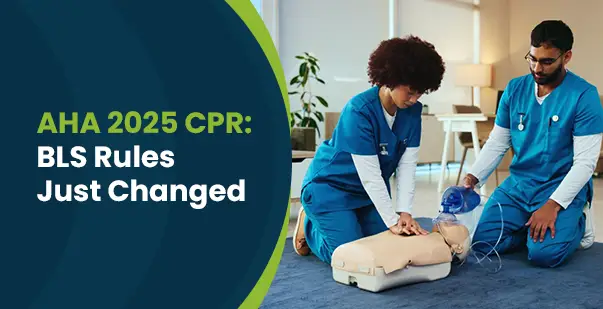




63-year-old Merryl Hoffman was walking in New York when she suddenly collapsed from cardiac arrest. Two nurses who happened to be nearby saw her fall. Without waiting, they rushed to her side and began CPR right away. They kept going until an ambulance arrived. Thanks to their fast action and knowledge of CPR, Merryl survived.
Stories like this show how CPR, when performed quickly, can mean the difference between life and death. CPR, or cardiopulmonary resuscitation, is a life-saving skill that helps keep blood and oxygen flowing when someone’s heart or breathing stops. It’s something anyone can learn and use in an emergency, even without medical training. So, continue reading to learn the steps on how to perform CPR for adults and children, when to start, and when it’s okay to stop.
What are the 7 Steps to CPR?
A large-scale U.S. study of nearly 195,000 witnessed OHCA cases (2013–2023) found that starting CPR within 2 minutes of collapse increased the survival to hospital discharge by 78%, compared to no bystander CPR. These 7 CPR basics will guide you through what to do in a life-threatening situation.
- Scan the Scene for Safety
- Check for Response
- Call for Help
- Check for Breathing
- Start Chest Compressions
- Give Rescue Breaths (If Trained)
- Keep Doing CPR Until Help Comes
- Scan the Scene for Safety
Before you proceed to help a person, look and ensure that it is safe. Step away from traffic, fire, water, downed power lines or electrical hazards, and collapsed or unstable structures, which are common in emergencies. Ensure that the area is safe before proceeding to help the person in need. If the area is not safe, call 911 right away and wait for trained responders.
- Check for Response
Gently tap them and shout, “Are you okay?” If they do not respond or move, they may require CPR. You need to move quickly if they are unconscious. Do not shake them violently; only try to rouse them with a voice and a light touch. If they do wake up, monitor them and stay with them until help comes. Avoid assuming someone who is just sleeping deeply or intoxicated needs CPR; always check for normal breathing and responsiveness first.
- Call for Help
If you are with another person, have them call emergency services (e.g., 911) and get an AED if one is accessible. If you are alone, call first and then start the CPR procedure. Assistance will arrive as you start chest compressions. If possible, leave the phone line open to the 911 operator for guidance.
Exception: If the victim is a child under 8 years old and you are alone, give about 2 minutes of CPR first before calling 911.
- Check for Breathing
Look at the chest to see if it’s rising. Listen and feel for breathing by placing your ear close to the mouth. Do this for no more than 10 seconds. If the person isn’t breathing or is only gasping, it’s time to begin CPR. Sometimes you may notice agonal gasps, which are abnormal, weak breaths. These are not normal breathing and still mean the person needs CPR right away.
Expert Tip: Gasping, snoring, or occasional weak breaths are not normal breathing. These can be signs of cardiac arrest. Treat them as if the person isn’t breathing.
- Start Chest Compressions
Place one hand over the other and push hard and fast in the center of the chest. Press down about 2 inches deep at a rate of 100–120 times per minute (roughly to the beat of the song “Stayin’ Alive”). Let the chest rise after each push. This helps pump blood through the body. Compressions should be smooth and continuous with minimal interruptions.
- Give Rescue Breaths (If Trained)
After 30 chest compressions, give 2 rescue breaths. Tilt the person’s head back, lift the chin, pinch the nose, and breathe into the mouth for 1 second. Watch the chest rise. If it doesn’t rise, reposition the head and try again. If you are untrained or unsure, do not delay chest compressions. Hands-only CPR (compressions only) is still highly effective and much better than doing nothing.
- Keep Doing CPR Until Help Comes
Repeat 30 compressions and 2 breaths over and over. Do not break until help arrives, the victim wakes up, or you are unable to keep going. If an AED is available, use it immediately and follow the voice prompts. Defibrillation with CPR early on greatly improves chances of survival. Rotating with another person every 2 minutes helps prevent fatigue and keeps compressions strong and effective, especially during long durations.
Best Songs to Keep the Beat for CPR
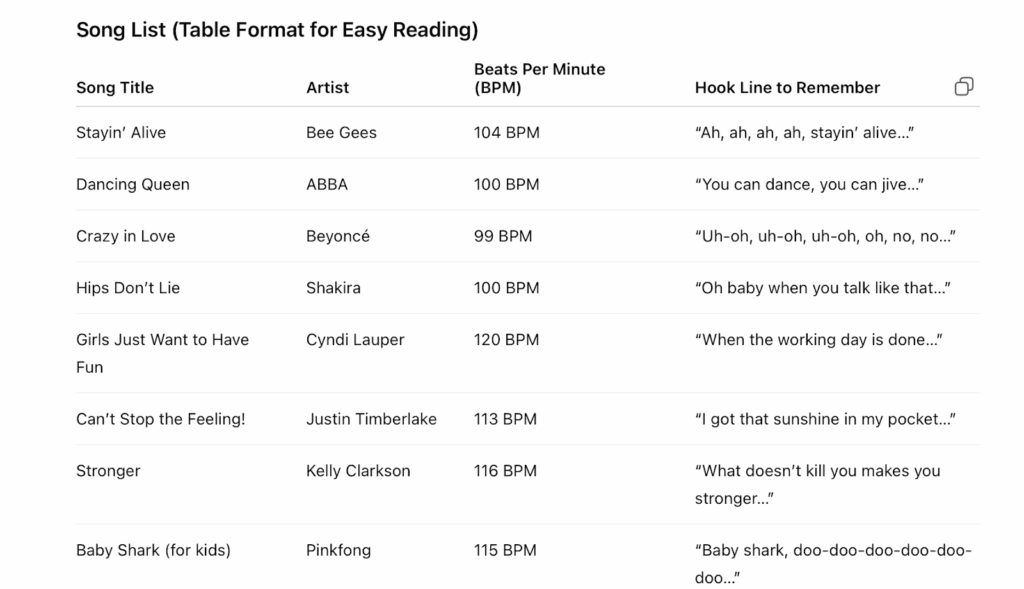
Is It Always 30 Compressions And 2 Breaths During CPR?
The 30:2 compression-to-breath ratio is the most common CPR guideline for single rescuers treating adults or children. That means 30 firm, fast chest compressions followed by 2 rescue breaths. Compressions keep blood circulating, and the breaths provide oxygen to vital organs.
To give rescue breaths, tilt the head back, pinch the nose shut, and blow into the mouth for 1 second each. If you’re not CPR-trained or unsure about giving breaths, perform Hands-Only CPR. Just push hard and fast in the center of the chest at a rate of 100 – 120 compressions per minute. Even without breaths, this can sustain blood flow and save lives.
However, note that infant CPR and two-rescuer CPR follow different ratios. For instance, when two rescuers are present during infant or child CPR, the guideline changes to 15 compressions and 2 breaths.
How Do You Perform Manual CPR?
A study of nearly 200,000 out‑of‑hospital cardiac arrest cases from 2013 to 2022 found that people who received CPR within two minutes had 81% higher odds of surviving to hospital discharge. They also have 95% higher chances of leaving without serious brain damage, compared to those who didn’t receive bystander CPR. So, how to perform CPR manually? Here are the basic steps:
- Place the Person on a Flat Surface
Lay the person on their back on a hard, flat surface like the floor. This helps you press the chest properly during compressions. Soft surfaces like beds won’t work because they absorb your push and reduce the pressure needed to help the heart pump. Use a backboard or hardboard instead. If possible, move the person carefully without causing spinal injury, unless immediate CPR is needed.
- Hand Placement
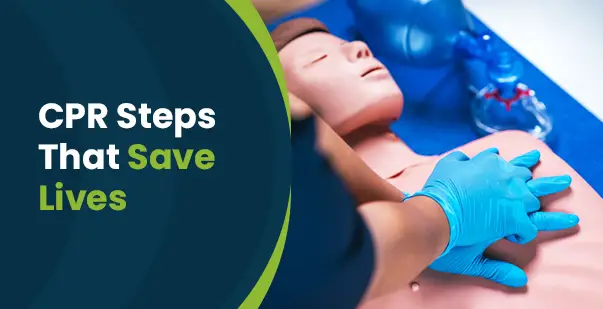
Kneel beside the person’s chest. Put the heel of one hand in the center of the chest, right between the nipples. Place your other hand on top and lock your fingers. Keep elbows locked, push with body weight to give strong compressions. Also, count out loud to stay consistent. Avoid pressing on the lower end of the sternum or the ribs to prevent injury like fractures or internal organ damage.
- Start Compressions
Push hard and fast, at least 2 inches deep into the chest. Do 100 to 120 compressions per minute. Let the chest rise completely between pushes. You can follow the rhythm of songs like “Dancing Queen” to keep the right pace while doing compressions. Do not lean on the chest between compressions to allow full recoil.
The key differences between child and adult CPR are summarized in the table below:
| Aspect | Adult CPR | Child CPR |
| Lay-rescuer approach | If you cannot give breaths, hands-only CPR is acceptable for adults. | If you cannot give breaths, hands-only CPR is acceptable for adults. |
| Compression rate | You should compress at a rate of 100–120 compressions per minute. | You should compress at a rate of 100–120 compressions per minute. |
| Compression depth | You should compress at least 5 cm (about 2 inches) deep. | You should compress about 5 cm (about 2 inches) deep or one-third of the chest’s anterior–posterior depth. |
| Hand position | You should place your hands on the lower half of the sternum in the center of the chest. | You should place your hand(s) on the lower half of the sternum in the center of the chest. |
| Number of hands | You should use two hands for chest compressions. | You should use one or two hands, depending on the child’s size, to achieve proper depth. |
Do You Still Perform CPR if There is A Pulse?
No. Do not perform chest compressions if the person has a pulse. CPR is only needed when there is no pulse and no breathing. If the person has a pulse but isn’t breathing normally, provide rescue breaths only:
- Adults and children: 1 breath every 5 – 6 seconds (about 10–12 breaths per minute)
- Infants: 1 breath every 3 – 5 seconds (about 12–20 breaths per minute)
- Each breath should last 1 second, with a visible chest rise.
- Recheck the pulse every 2 minutes. If it disappears, start full CPR immediately (30 compressions and 2 breaths).
Where to check the pulse:
- Adults and children: Use the carotid artery (side of the neck).
- Infants: Use the brachial artery (inside the upper arm).
Remember:
- Pulse but no breathing → Rescue breaths only
- No pulse and no breathing → Full CPR (30:2)
Using an AED During CPR: What You Should Know
An AED is a small device that can restart a heart that has stopped beating normally. It sends an electric shock to the heart to help it beat correctly again. AEDs are safe, easy to use, and often found in public places. To use an AED, follow the given instructions:
- Turn on the AED
Open the case and press the power button. Some units turn on when you lift the lid. Place the device next to the person’s shoulder so the leads reach easily. Follow the voice and picture prompts. Do exactly what it says, step by step. Stay calm and keep your hands free.
- Expose And Prepare The Chest
Cut or remove clothing to bare the chest. Quickly wipe sweat or water; the skin must be dry. Remove any medication patch with a gloved hand and wipe the area. If chest hair stops pads from sticking, shave or press a pad down, rip it off, then apply a fresh pad.
- Apply The Pads Correctly
Peel the pads and stick them firmly. One pad on the right upper chest above the nipple; the other on the left side below the armpit. Press to seal. For children, use pediatric pads if available and follow the child placement images closely, too.
- Analyze and Shock
Once pads are on, connect the cable if needed. The AED will say, “Analyzing.” Make sure nobody touches the person. The device will decide if a shock is needed. If the AED says “Shock advised,” make sure everyone is clear. Loudly say, “Clear!” and look to confirm no one is touching the person. Press the flashing shock button. The shock is quick and safe for helpers. Do not touch the victim during shock delivery.
- Resume CPR Immediately
After any shock, start chest compressions right away. If no shock is advised, begin CPR instructions immediately. Do 30 compressions, then 2 breaths if trained, or do Hands-Only CPR at 100–120 per minute. Keep going for about two minutes, then follow the AED prompts to reanalyze and repeat as needed continuously.
Note:
- Do not place a pad over a pacemaker or implanted defibrillator bump; move it at least one inch (2.5 cm) away.
- Avoid metal piercings and jewelry under pads.
- If the chest is small and the pads touch, place one pad center chest and the other on the back for better pad spacing.
- Do not touch the victim during shock delivery.
Read More: How to perform CPR on a baby?
When to Stop CPR?
CPR is a lifesaving procedure, but one is not supposed to perform CPR forever. There are some conditions that dictate when to discontinue CPR, whether that is the recovery of the person, the arrival of specialists, or your physical inability to keep going. Stopping CPR is as crucial as initiating CPR.
- The Individual Starts To Breathe
If they start breathing by themselves, open their eyes, or show movement, you can stop doing CPR. It means that their heart might be beating again. Keep watching them until help comes, and be ready to continue CPR in case they again stop breathing.
- Expert Help Comes and Steps In
When professional emergency medical staff or trained staff arrive, stop your CPR and let them take over. They are equipped and trained to continue treatment. Let them know what you have done so far to help, such as how long you have been doing CPR and if you used an AED.
- An AED Is Ready and Gives Instructions
If an AED is available, discontinue CPR only when the machine orders you to. Turn it on and follow the voice instructions. It will guide you step by step. Once you have applied the AED, resume CPR if needed, and just continue to follow the AED’s instructions until emergency personnel arrive.
- You Are Too Exhausted To Go On
If you become too tired or weak to continue CPR, it’s important to recognize your limits. CPR is strenuous, and at times, one cannot continue without assistance. If there is another individual around, switch every 2 minutes to avoid fatigue.
Note: Good Samaritan Laws in the U.S. are designed to protect people who provide emergency help in good faith. These laws reassure lay rescuers that they won’t face legal trouble for trying to save a life. This protection encourages bystanders to step in during emergencies.
Common Errors to Avoid When Doing CPR
When you do CPR, you need to be quick, but most individuals make minor mistakes that will render it less effective. Knowing what you shouldn’t do will allow you to treat them better and provide a person with a better survival chance. Most common mistakes to avoid:
- Not Calling for Help Quickly
One of the major errors is not calling emergency services immediately. Always call 911 or have someone around you call while you begin CPR protocols. Having professional assistance as quickly as possible provides the individual with a significantly higher survival rate. Don’t wait before calling for any reason.
- Incorrect Hand Placement
Placing your hands in the wrong spot can make CPR less effective. Hands should be in the center of the chest, on the breastbone, between the nipples. Pressing too high or too low may not pump the heart well and could cause injury. Proper placement helps blood flow correctly.
- Shallow or Slow Compressions
Another mistake is not pushing hard or fast enough. Compressions must be at least 2 inches deep in adults and done at a rate of 100–120 per minute. Too shallow or too slow compressions will not keep enough blood moving, reducing the chance of saving the person’s life.
- Forgetting to Allow Full Chest Recoil
After each push, let the chest rise back fully before pressing again. Many people lean on their chest, which stops the heart from filling with blood. Full recoil is just as important as the push. Think “push hard, let go” to allow proper blood flow with every compression.
- Not Calling for an AED Immediately
One of the most common mistakes during CPR is delaying the call for an AED. An AED is crucial for restoring a normal heart rhythm. Always ensure someone retrieves and prepares the AED right away while compressions continue uninterrupted.
- Not Checking for Normal Breathing vs Gasping
It’s easy to confuse gasping or irregular breaths with normal breathing. This mistake can delay CPR. Always take a few seconds to carefully assess whether the person is breathing normally. If not, start chest compressions immediately to keep oxygen circulating through the body.
- Interrupting Compressions for Too Long
Stopping chest compressions for more than a few seconds reduces blood flow to the brain and heart, lowering survival chances. Keep interruptions to an absolute minimum. Switch rescuers quickly if needed and only pause briefly for breaths, rhythm checks, or AED shocks.
CPR Training: Fast, Affordable, Employer-Approved!
CPR is perhaps one of the most valuable skills one can possibly acquire. The best part is that you don’t need to be a doctor to save lives; knowing how to perform CPR can make all the difference. When performing CPR, check responsiveness and breathing first. Call for emergency help immediately. Start chest compressions hard and fast and push in the center of the chest at least 100–120 times per minute. Give rescue breaths if trained with two breaths after every 30 compressions. If not, continue with hands-only CPR.
With our fast, affordable, and employer-accepted CPR certification, you can train online at your own pace and receive your certificate instantly after passing. So, don’t wait until too late, enroll in a CPR course today. Get trained, remain prepared, and be a hero to someone when they need you the most.