



In April 2025, 14-year-old Talya from Oxford saved her father. Talya performed cardiopulmonary resuscitation (CPR) under the dispatcher’s guidance for several minutes until emergency services arrived. This shows the significance of life-saving skills. The most important ones are CPR and rescue breaths. But they are not the same. They serve different purposes depending on the situation. For example, drowning victims may need immediate rescue breaths even if the heart is still beating, while sudden cardiac arrest demands chest compressions right away. Therefore, you must understand when and how to use rescue breathing vs CPR. So, keep reading to learn how they differ from each other and what techniques to use when performing on adults, children, and infants.
What is CPR?
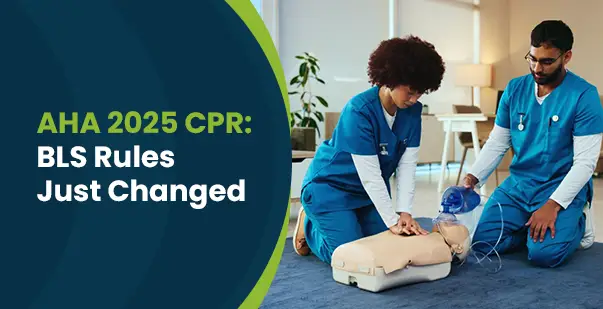
During a cardiac arrest, the heart no longer circulates blood, and if left untreated, death results in a matter of minutes. These situations require immediate CPR, which includes rhythmic compression of the chest to physically pump blood and rescue breathing to provide oxygen. Adult and pediatric CPR differ, especially in compression depth, hand placement, and the balance between compressions and breaths. This is because children’s hearts and airways respond differently from adults’. The two main techniques to perform CPR are discussed as follows:
Conventional CPR
Conventional CPR can be performed by trained professionals or laypeople (people without medical backgrounds who have completed certified CPR courses). In this method, they use 30 chest compressions and 2 rescue breaths in cycles. This compression-to-breath ratio of 30:2 facilitates blood circulation and enables the lungs to ventilate with oxygen periodically.
Hands-Only CPR
This is recommended when an adult or teenager collapses suddenly and you are not properly trained to offer rescue breaths. You will give compression-only with no rescue breaths. Hands-only CPR has been shown to double or even triple survival rates in out-of-hospital cardiac arrests when started immediately, according to the American Heart Association. It’s especially effective in the first few critical minutes, helping maintain blood flow to the brain and vital organs until advanced care arrives.
What is Rescue Breathing?
Rescue breathing, also referred to as artificial ventilation or mouth-to-mouth resuscitation, is an emergency procedure. It is used when a person is in respiratory arrest (a state in which spontaneous breathing has stopped, but a pulse is still present).
The primary objective of rescue breathing is to provide positive pressure ventilation. It delivers oxygen into the lungs and maintains gas exchange until advanced medical care becomes available. This intervention supports oxygenation of vital organs and prevents hypoxia-related complications.
Rescue breathing often works hand in hand with CPR. When chest compressions keep blood circulating, rescue breaths supply the oxygen that circulation needs to reach the brain and other organs.
What Are The Different Forms of Rescue Breathing?
Rescue breathing may be performed in a few ways, depending on the rescuer’s training, the available equipment, and the individual’s condition. It all has the same goal of getting oxygen into the lungs but the method might be varied. Here are the different rescue breathing methods:
Mouth-to-Mouth
This is the traditional method of rescue breathing and is commonly taught in first aid classes. It is simple and effective when performed correctly.
How to do it:
- Create a seal over the victim’s mouth with your mouth.
- Pinch the nostrils closed to prevent air from escaping.
- Give gentle breaths lasting about 1 second each.
Mouth-to-Nose
This method is used when mouth-to-mouth is not possible, such as when the mouth is injured or cannot be opened. It is also useful for infants, whose small faces make it easier to create a proper seal over the nose, and in some cases, over both the nose and mouth together.
How to do it:
- Close the victim’s mouth completely.
- Seal your lips around the person’s nose.
- Deliver gentle breaths into the nose.
- Watch for the chest to rise.
For babies, this technique ensures that enough air reaches the lungs without excessive pressure, which is crucial given their smaller and more delicate airways.
Mouth-to-Mask (Pocket Mask)
Many first aid kits and CPR training include a CPR face mask or face shield. This is a protective barrier device with a one-way valve.
How to use it:
- Place the mask over the victim’s mouth and nose to form a seal.
- Blow through the one-way valve opening in the mask.
- Ensure chest rises with each breath.
- Use masks with HEPA filters when available for added safety.
This method is considered safer because it reduces the risk of disease transmission and minimizes direct contact with bodily fluids. It allows rescuers to provide effective breaths with greater protection.
Bag-Valve Mask (BVM)
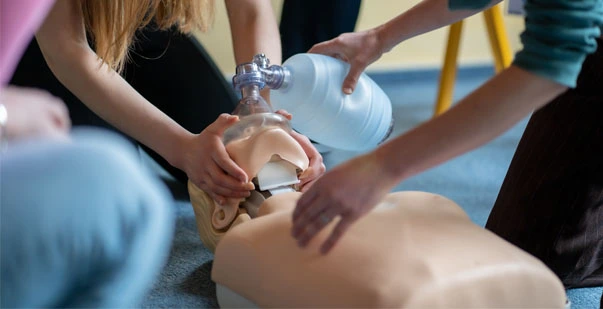
This device is commonly used by trained professionals such as paramedics or hospital staff. It delivers higher volumes of air and requires practice to use effectively.
How to use it:
- Fit the mask tightly over the victim’s mouth and nose.
- Attach the mask to the self-inflating squeeze bag.
- One rescuer holds the mask in place while another squeezes the bag.
- It can be connected to supplemental oxygen for greater effectiveness.
Important: If used improperly, especially without an advanced airway, a BVM can push air into the stomach instead of the lungs, a complication known as gastric insufflation. This increases the risk of vomiting and aspiration, which can worsen the patient’s condition. Proper technique and gentle ventilation are essential to reduce this risk.
Read More: What You Need to Know for Effective CPR
How Does Rescue Breathing Differ from CPR?
Even though CPR and rescue breathing often go hand-in-hand (since full CPR includes rescue breaths), there are important differences in their use and technique. Below is a comparison outlining of rescue breathing vs CPR:
| Aspect | CPR | Rescue Breathing |
| When to use | The person has no pulse or the heart has stopped.They are unresponsive and not breathing. CPR is the primary procedure for cardiac arrest. | When there is a pulse but no breathing.In case of overdose, drowning, or choking. |
| Purpose | Circulates blood when the heart is not pumping.Preserves brain and organ function.Manually delivers oxygen to body tissues.Maintains life until the heart can be restarted | Provides oxygen to the lungs when a person can’t breathe.Keeps blood oxygenated to prevent brain damage.Helps prevent cardiac arrest by maintaining oxygen levelsSustains life until breathing returns or help arrives |
| Signs Indicating Need | No pulse (or no heartbeat felt)No normal breathingNo responsiveness | Pulse is present (heartbeat exists), but there is no breathing or only occasional gasps. The person may be unconscious. |
Situations Where Rescue Breathing Shouldn’t Be Done
You might wonder if there are times when you should skip rescue breaths. The answer is yes, in certain scenarios, performing rescue breathing is not recommended. It is usually skipped in situations like:
Untrained Rescuers, Use Hands-Only CPR
If you have no CPR training, the American Heart Association (AHA) advises not to attempt rescue breaths. Chest compressions alone are the safest and most effective action.
Why It Matters:
- Starting in 2010, the AHA updated its CPR guidelines to emphasize “CAB” (Compressions, Airway, Breathing).
- This change put chest compressions first, because compressions are critical and should not be delayed by fiddling with rescue breaths in the first moments of an adult cardiac arrest.
Adult Sudden Collapse (Cardiac Arrest)-Initial Compressions Priority
In an adult who suddenly collapses, experts advise focusing on chest compressions immediately and not wasting time on rescue breaths in the first few minutes. An adult in sudden cardiac arrest often has oxygen still in their blood from moments before.
Why It Matters:
- By doing compressions, you circulate that oxygen to the brain and heart.
- Interrupting compressions for breaths too early can actually reduce the effectiveness of chest compression.
- An adult’s blood oxygen doesn’t drop to zero immediately. So, it is more important to get the blood moving. Therefore, in cases of sudden cardiac arrest in adults, compression-only CPR is often enough at first.
COVID-19 or Disease Transmission Concerns
During the COVID-19 pandemic, guidelines were updated to allow rescuers to forgo mouth-to-mouth breaths if they felt unsafe. AHA highlighted that Hands-Only CPR can be an effective alternative that also minimizes infection risk.
How to Do It Safely:
- If you don’t have a barrier device (mask) and are worried about diseases, doing just chest compressions is a reasonable approach for an adult victim.
- Professional responders now often use bag-mask devices for ventilation to avoid direct mouth contact.
How to Provide Rescue Breathing for an Adult?
If you encounter an unresponsive person who is not breathing (or only gasping) but does have a pulse, you should begin rescue breathing immediately. Here is a step-by-step guide in simple terms:
Step 1. Call 911 (Activate EMS)
Before starting rescue breaths, get emergency medical help quickly. If you’re alone with the person, call 911 immediately (you can use speakerphone). If others are around, have someone else call so you can begin aid right away. Quick activation of EMS is critical.
Step 2. Position the Person & Open the Airway
Gently lay the person flat on their back. Open their airway using the head-tilt, chin-lift maneuver. Place one hand on their forehead and tilt the head back. With your other hand, lift the tip of the chin up. This pulls the tongue away from the back of the throat and opens the airway. Rapidly check the mouth to ensure no obvious obstruction. If you notice something (such as vomit or an object), remove it if possible.
Step 3. Give Rescue Breaths
Rescue breathing delivers oxygen to the lungs to maintain the brain and organs until a person regains natural breathing or healthcare workers arrive. The following are the procedures on how to give rescue breaths to a person:
Seal the Airway
Pinch close the individual’s nostrils with your hands (to prevent the escape of air) and make an effective mouth seal over their mouth. You may want to use a face shield if it is available.
Breath Delivery
Breathe slowly for approximately 1 second while observing the patient’s chest. Breathe as if you’re steadily blowing up a balloon, not too forcefully. Watch for the chest to rise. This chest rise tells you the breath went into the lungs.
If the Chest Doesn’t Rise
Re-tilt the head and ensure a good seal, then try another breath. Sometimes the airway wasn’t fully open; repositioning often fixes it. Do not attempt more than 2 breaths in between chest compressions if you were doing CPR; but since we are doing rescue breathing (pulse present), you will be giving a continuous series of breaths.
Breathing Rate
Continue giving 1 breath every 5 to 6 seconds for an adult. That’s about 10–12 breaths per minute. You can count “one-one-thousand, two-one-thousand, three-one-thousand, four-one-thousand, five-one-thousand” between breaths as a timing guide. Each breath should be approximately. 1 second long. Make sure the chest comes down (exhales) between breaths.
Monitor Pulse and Chest
Every minute or so, quickly check that the person still has a pulse. If at any time you are unable to feel a pulse or the chest is not rising with the breaths and the individual is still non-responsive, begin full CPR.
Step 4. Continue until Help Arrives or Condition Improves
Continue to deliver rescue breaths at a normal rate until:
- Breathing comes back to normal (stop and observe them at this point).
- EMS takes over and can provide advanced airway support.
- You become physically unable to continue (if so, and the person still isn’t breathing, consider CPR or find someone to assist).
- If the person vomits or the airway becomes obstructed at any point, turn them to the side (recovery position) to clear the airway, then resume rescue breathing if needed.
Step 5. Mouth-to-Nose Option
If you cannot seal over the person’s mouth (due to injury or perhaps you have a face shield designed for nose breathing), you can perform mouth-to-nose rescue breathing. Close the person’s mouth, seal your lips around their nose, and breathe in. The rest of the steps are the same.
| Fact: Performing rescue breathing can be tiring, but it is a crucial skill. Remember, brain cells begin to die within about 4–6 minutes without oxygen, so timely rescue breaths truly make a difference. Always prioritize your safety, too. Use a barrier device if one is available. |
CPR and Rescue Breathing for Children and Infants
Children and infants require special consideration during basic life support vs rescue breathing. Their bodies are smaller and more delicate. Moreover, pediatric cardiac arrests are usually caused by breathing problems (respiratory failure or airway blockage) rather than primary heart issues. This means rescue breaths are especially important for kids. The differences between CPR and rescue breathing for children and infants are:
| Aspect | Children | Infant |
| Pulse Check | Check the carotid pulse in the neck (side of windpipe) or femoral pulse in the groin crease. | Check the brachial pulse on the inside of the upper arm (between the shoulder and the elbow). |
| Chest Compression Technique | For a child, use 1 or 2 hands (depending on the child’s size) on the center of the chest (lower half of breastbone). | For an infant, use 2 fingers (index and middle) just below the nipple line on the sternum for a single rescuer. |
| Compression–Ventilation Ratio | 30:2 for single rescuer (30 compressions, then 2 breaths). If a second rescuer is available to help, use a 15:2 ratio (one does 15 compressions, then the other gives 2 breaths, and repeat). | 30:2 for single rescuer, same as child (30 compressions, 2 breaths). 15:2 for two rescuers (15 compressions, 2 breaths) |
| Rescue Breathing Technique | Use a mouth-to-mouth method. Pinch the child’s nose shut and seal your mouth over theirs to give breaths. | Use a mouth-to-mouth and nose-to-mouth approach. Cover the infant’s mouth and nose with your mouth to form a seal. |
| Rescue Breathing Frequency | Give 1 breath every 3 to 5 seconds (approximately 12 to 20 breaths per minute) when doing rescue breathing for a child. | Give 1 breath every 2 to 3 seconds, which comes out to 20 to 30 breaths per minute |
Special Considerations for Children and Infants
The basics of rescue breathing vs CPR are the same for all ages, but the techniques are modified to the patient’s size and needs. A few more considerations for children and infants on CPR and rescue breathing comparison are as follows:
- Children and infants are more prone to respiratory causes (choking, asthma, drowning). The AHA highlights the importance of ventilation for pediatric CPR because restoring breathing is often the key to restarting the heart in children.
- Use softer, smaller breaths for infants and kids. It’s a common mistake to blow too hard and too fast into a child’s lungs. Their lungs require only a small volume, puff cheeks, and gently exhale for 1 second.
- Don’t be afraid to perform CPR on children or infants. High-quality CPR greatly improves outcomes in children, even though their survival rates from cardiac arrest are still low.
Read More: How to perform CPR on a baby?
Common Myths About CPR and Rescue Breathing
There are quite a few misconceptions going around regarding CPR and rescue breathing. Let’s debunk some myths regarding when to give breaths and how CPR works:
Myth 1: “Only Doctors or Trained Professionals Should Do CPR.”
CPR is simple enough to be done by anybody and must be administered in case somebody’s life is at risk. You do not have to be a doctor to save a life with CPR. The training these days is so simplified that even teenagers and laypeople are able to perform it. Good Samaritan laws protect nonprofessional rescuers acting in good conscience, so do not fear legal actions in case you try to do so.
Myth 2: “CPR Will Usually Restart The Heart, Like You See in The Movies.
CPR by itself rarely “restarts” a stopped heart. Unlike how it’s dramatized on TV (where a couple of pumps and a breath and the person wakes up), real CPR is more about buying time. The chest compressions keep blood circulating to prevent brain damage, and the rescue breaths (if given) provide oxygen. Defibrillation (an electric shock) or advanced medical treatment is often needed to actually get a normal heartbeat back in cases of true cardiac arrest.
Myth 3: “You Must Do Mouth-To-Mouth For CPR to Work. Otherwise, It’s Useless.
Chest compressions are the most important part of CPR, and in many adult cases, compression-only CPR is highly effective. It’s a myth that CPR always requires mouth-to-mouth. The American Heart Association specifically recommends hands-only CPR for untrained bystanders on adult victims because it works well and encourages more people to take action.
Myth 4: “If They’re Occasionally Gasping Or Breathing A Little, You Shouldn’t Do CPR.”
Agonal gasps (irregular, occasional gasping breaths) are a sign of cardiac arrest and not normal breathing. Many laypeople mistake these gasps or snorts as the person “breathing” and thus hesitate to start CPR. If someone is unresponsive and only gasping or not breathing normally, you should begin CPR. Those gasps are the brain’s reflex and do not circulate oxygen effectively.
Myth 5: “I Might Get Sued If I Do CPR And Something Goes Wrong.”
Good Samaritan laws exempt the individual providing emergency aid in honest belief. You are highly unlikely to be in a legal position to be sued for trying CPR or first aid, unless you are willfully negligent or reckless. Laws such as these are in force specifically to alleviate this fear and to stimulate the Good Samaritan into taking immediate and decisive action. Don’t hesitate and let fear of legal liability stand in the way of trying CPR or rescue breathing.
Read More: List of 5 New CPR Myths vs Facts
Saving Lives with the Right Technique!
Both rescue breathing vs CPR are indispensable skills in emergencies. CPR restores blood circulation when the heart has stopped beating, and rescue breathing provides necessary oxygen when breathing has stopped. They typically go together (CPR includes breaths in the great majority), but you should understand which response is more effective based on the scenario.
By taking and operating these skills courses, you become a crucial link in the “chain of survival.” Your prompt action may save a life in these initial few critical minutes until paramedic personnel are on the scene. In an emergency, stay calm, follow the steps, and do your best; you just might save a life. Enroll in a CPR training course today!