



Did you know that according to UCSF, 25,000 people sprain their ankles every single day in the US? That’s more than 9 million ankle sprains annually, which doesn’t count wrist, knee, and other joint sprains that occur across the country. The whopping number makes a sprain one of the most common injuries requiring immediate treatment. When you face a sudden sprain or strain, quick interventions can improve your recovery time and prevent complications. For nearly half a century, the go-to treatment for these injuries has been the RICE method (Rest, Ice, Compression, Elevation), popular among coaches, athletes, and even parents. But does it still hold up? Here’s what it is, when to use it, and what modern updates recommend.
What is the RICE Method?
RICE method stands for Rest, Ice, Compression, and Elevation. It’s a widely recognized protocol for treating acute musculoskeletal injuries. The approach helps you manage pain, reduce swelling, and prevent further tissue damage during the critical first 24-48 hours after injury.
The method was popularized by Dr. Gabe Mirkin, an American physician and Sports Medicine expert, in the 1970s. He initially used the RICE method to speed up the recovery from acute injuries. Healthcare professionals worldwide now recommend this method as your first line of defense against sports injuries and everyday accidents.
What are the Components of the RICE Method?
Soft tissue injuries are not uncommon. You may roll over your ankle while walking on uneven terrain at some point. If such injury results in pain, inflammation, or bruising, this indicates that your body is trying to protect the injured area. The RICE method is a mnemonic for a four-step first-aid process that you can safely do even at home. Let us explore the components of the RICE injury method below:
R: Rest (Relative Rest)
The pain that happens due to the injury is a message to your brain, alerting you that something is wrong and that you need rest. It might be tempting to ignore the pain and treat it with painkillers. But it can make the condition worse. Modern practice encourages relative rest with gentle movement to protect the injured limb while preventing stiffness. Gentle movement may cause mild discomfort, but should not spike pain.
What to do:
- Stop the activity immediately after the injury.
- Use a sling, brace, or crutches if needed for short-term protection.
- Begin gentle, pain-free movements (like ankle circles or finger flexes) within 24–48 hours, unless a fracture or severe injury is suspected.
- Avoid movements that cause sharp or worsening pain.
I: Ice
Reduce swelling and relieve pain temporarily.
Cold constricts blood vessels and numbs the area, helping with discomfort. But newer studies suggest over-icing may slow healing by suppressing natural inflammation needed for tissue repair.
What to do:
- Apply a covered ice pack (use a towel barrier) for 15–20 minutes per session.
- Repeat every 2–3 hours during the first 24–48 hours.
- Let the skin return to normal temperature before reapplying.
- Some experts now recommend alternating cold and gentle heat after the first day for comfort.
C: Compression
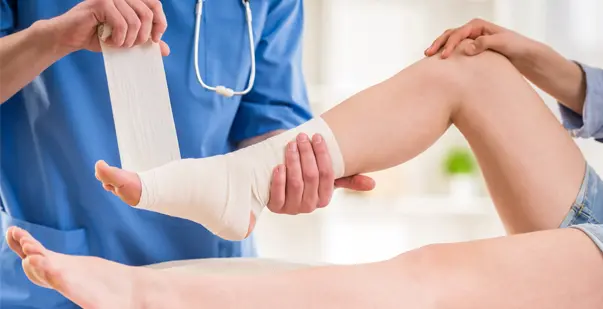
Compression using the bandage or sleeve can reduce swelling and provide some support to the tissues around the injured area. Moreover, proper compression practices will help you keep the swelling under control. It allows you to gain stability for early recovery.
How to do:
- Use an elastic bandage or compression wrap
- Wrap the injured area snugly in a figure-eight shape, but not too tightly
- Loosen the compression if you experience extreme tingling, numbness, or pain.
E: Elevation
Elevation reduces swelling and promotes drainage of excess fluid. Elevation works because it uses gravity. It raises the injured limb above the level of the heart allows fluid to drain back into the body’s circulation instead of pooling in the injured tissues.
What to do:
- Elevate the injured limb above heart level as often as possible in the first 24 – 48 hours.
- Use pillows or cushions for comfort and stability.
- Example: If you sprain your ankle, lie on your back and rest your leg on two pillows so your foot is higher than your chest.
Read More: What are Avulsion Injuries? Symptoms and Treatments
How Long Should You Use RICE for?
Typically, you can begin administering the RICE method as soon as possible after the injury. Immediate administration within the first few hours can quickly heal the injury. Now, how long does each step last? Take a look at the duration for each protocol below.
- Rest: Rest for the first 24-48 hours or even until the swelling and pain begin to ease. After that, you can start moving gently to speed up the recovery.
- Ice: Apply an ice pack to the affected limb for 20 minutes, for every 2-3 hours in the first 48 hours.
- Compression: Wear it during the daytime. Experts suggest removing the compression overnight, unless your healthcare professional specifically advises it.
- Elevation: Try to keep the area elevated at least for the first two days.
| Component | What to Do | Duration/Frequency | Important Notes |
| Rest | Avoid using the injured area | First 24-48 hours | Start gentle movement once swelling and pain begin to ease to speed recovery |
| Ice | Apply ice pack to affected area | 20 minutes every 2-3 hours | Focus on first 48 hours after injury |
| Compression | Wrap with elastic bandage | Wear during daytime only | Remove overnight unless healthcare professional advises otherwise |
| Elevation | Keep injured area raised above heart level | As often as possible | Especially important for the first 2 days |
What Are the Injuries Where RICE Can Be Applied?
Injuries are an inevitable part of life, especially if you are an athlete or active individual. The RICE method, even a simple technique, works best for acute soft tissue injuries. So what types of injuries can be treated with RICE? Let’s find out:
Sprains and Strains
You can effectively use RICE for ligament sprains (overstretched or torn ligaments) and muscle strains (overstretched or torn muscle fibers). In fact, the American Academy of Family Physicians reports that seven in 1,000 Americans, especially young adults, will have an ankle sprain, with most responding well to immediate RICE application. You can also use the approach for joint sprains in wrists, knees, and shoulders.
Imagine a weightlifter who overextends their wrist during a heavy lift, RICE helps manage the initial inflammation and supports recovery.
Sports-Related Injuries
Indoor sports such as basketball carry the greatest risk of ankle sprain with an incidence of 7 per 1,000 cumulative exposures, making RICE knowledge essential for athletes. You can use the method for acute injuries like tennis elbow, runner’s knee, and hamstring strains when they first occur.
For example, a soccer player who pulls their hamstring during a sprint can immediately apply RICE to minimize tissue damage and swelling.
Everyday Injury
Minor workplace injuries, falls, and household accidents often require immediate RICE treatment. You can safely use this method for bruises, minor joint injuries, and muscle contusions that don’t involve broken bones or deep wounds.
Consider someone who slips on wet stairs and twists their knee. Applying RICE within the first hour can prevent excessive swelling and speed up recovery
Bruises and Tendon or Ligament Injuries
RICE works really well for bruises caused by a direct hit or bump. Applying ice and compression quickly helps reduce bleeding under the skin, which means less swelling and faster pain relief. Minor tendon or ligament injuries, like mild tendonitis or bursitis flare-ups, can respond to RICE in the first few days. It calms swelling and discomfort until proper rehab exercises take over.
Consider a situation where someone bumps their shin hard against a coffee table. Applying ice and compression within minutes can significantly reduce the dark bruising and prevent tissue damage.
When Not to Use the RICE Method?
The RICE method works well for minor sprains and strains, but not for every injury. Skip it and seek medical help if you notice:
- Suspected Fracture: Severe pain, visible deformity, or inability to bear weight or move.
- Deep Cuts or Open Wounds: Especially with uncontrolled bleeding. So, focus on stopping the bleeding first.
- Nerve Symptoms: Persistent numbness, tingling, weakness, or rapidly increasing swelling.
- Possible Dislocation: Joint appears out of place or doesn’t improve within 48–72 hours.
- Chronic or Overuse Injuries: Repetitive strain or long-term pain needs a rehab or physiotherapy plan, not RICE.
What are the Limitations of RICE Treatment?
The RICE method is not inherently wrong. It can be useful in some cases. But in many cases, especially in chronic conditions, it can cause more harm than good. Here’s why:
- Muscle Deconditioning: Excessive rest can cause muscle atrophy within 2–3 weeks. Modern rehab discourages full immobilization because it weakens muscles, reduces endurance, and delays return to movement. Use relative rest and begin gentle motion as soon as it’s safe.
- Joint Stiffness: Keeping the injured area still for too long leads to stiffness and limited flexibility. Early, pain-free range-of-motion exercises help maintain joint health and shorten recovery.
- Prolonged Icing Drawbacks: Continuous or excessive icing can reduce comfort, impair circulation, and slow tissue repair. Apply ice in short sessions (15–20 minutes) spaced throughout the day.
What are the Common Mistakes to Avoid in the RICE Method?
While RICE for sprains is highly beneficial, there are some common mistakes you might make while using the technique. Let’s take a look at them below:
- Ice: Don’t place ice directly on the skin. Always use a cloth or towel barrier to prevent frostbite.
- Compression: Don’t wrap too tightly; if you notice numbness, tingling, or color change, loosen it immediately.
- Rest: Don’t over-rest. Begin gentle, pain-free movement within 24–48 hours to prevent stiffness and weakness.
- Elevation: Don’t forget to keep the injured limb elevated for the first 1–2 days to reduce swelling.
- Pain signals: Don’t ignore persistent or worsening pain after 48–72 hours. Consult a healthcare professional for evaluation.
What to Do Instead of the RICE Method?
The RICE method has been a staple first aid technique for decades to treat injuries. However, over the years, sports medicine has evolved and has introduced updates that can expand or even replace RICE in some cases. Here are some alternatives to the RICE method:
M.E.A.T (Movement, Exercise, Analgesics, Treatment)
- Focuses on early, controlled movement and gentle strengthening instead of full rest.
- Encourages pain-free range-of-motion exercises while using pain relief and guided therapy as needed.
- Ideal for muscle strains or mild sprains where stiffness and weakness can develop quickly.
P.O.L.I.C.E (Protection, Optimal Loading, Ice, Compression, Elevation)
- Begins with protection to avoid further harm.
- Introduces optimal loading—gradually reintroducing motion and weight-bearing as soon as it’s safe.
- Retains the benefits of ice and compression while discouraging total immobilization.
P.E.A.C.E & L.O.V.E
- P.E.A.C.E: Protect, Elevate, Avoid anti-inflammatories, Compress, Educate.
- L.O.V.E: Load, Optimism, Vascularization (light cardio), Exercise.
- Divides recovery into two phases. immediate (PEACE) and long-term (LOVE).
- Promotes education, positive mindset, and circulation to support sustainable healing.
Read More: A Complete Guide to Cracked Ribs Diagnosis and Treatment
What are the Myths Regarding the RICE Method?
Being an age-old method, the RICE method has been the subject of controversy in managing injuries. Here, let us differentiate between fact and fiction regarding this evidence-based first aid method:
Myth: Ice should be applied for hours.
Fact: Use ice for 15–20 minutes at a time, then remove it. Over-icing can slow healing and reduce circulation, increasing the risk of frostbite or nerve injury.
Myth: Complete rest is always best.
Fact: Short rest is helpful early on, but prolonged immobilization weakens muscles and stiffens joints. Aim for relative rest and gentle, pain-free motion within a day or two.
Myth: RICE works for every injury.
Fact: RICE is meant for acute soft-tissue injuries like sprains or strains. It’s not effective for fractures, open wounds, or chronic overuse injuries, which need professional evaluation.
Myth: Tighter compression is better.
Fact: Compression should be snug, not tight. If you notice numbness, tingling, or pale skin, loosen the wrap immediately to prevent restricted blood flow.
Smart Injury Recovery Starts with the RICE Method
The RICE method remains a simple first step for many acute sprains, strains, and contusions, especially in the first 24 – 48 hours. Pair it with graded movement and, when needed, updated frameworks like POLICE or PEACE & LOVE. If pain, swelling, or function don’t improve within a couple of days, or if red-flag symptoms appear, seek medical care.
Ready to build real-world first-aid skills? Enroll in our Online First Aid Certification for step-by-step demos, scenario practice, and printable checklists.