

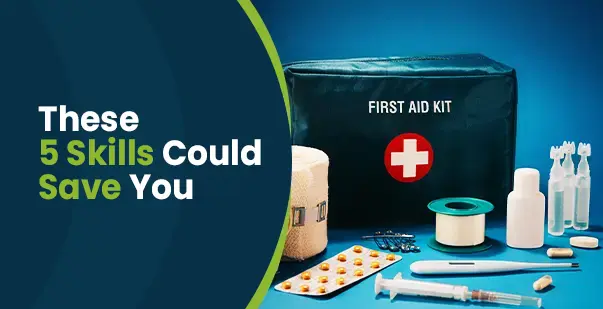
You never plan for emergencies, but they still happen. You may remember a neighbor slipping on the stairs, a child choking at lunch, or maybe a coworker fainting during a meeting. In those first few minutes before help arrives, it’s not medical equipment that makes the difference. It’s people, ordinary people who know what to do.
That’s what World First Aid Day (13 Sept, 2025) is about: a global reminder that these skills save lives everywhere. According to AHA Journals, only 40% of cardiac arrest victims receive CPR from bystanders. Imagine how many more lives could be saved if more people were trained.
This guide covers five simple lifesaving skills you can use in real emergencies. With them, you’ll have the confidence to step up when your community needs you most.
Why First Aid Skills Matter
In an emergency, the first few minutes decide how things turn out. A sudden collapse, choking, or a serious fall can’t wait for professionals to arrive. The care you give in that moment can stabilize the person until help comes. Quick action while providing first aid, like CPR or bleeding control, raises survival rates and lowers the risk of further harm.
Consider the story of 16-year-old Joshua Gomes from Massachusetts. On the way home from a family outing, his father suddenly went into cardiac arrest and collapsed at the wheel. Joshua quickly grabbed control, steered the car to safety, and brought it to a stop. He then relied on his CPR training and started compressions until emergency responders arrived. Because of his quick actions and first aid skills, his father survived.
But the importance of learning emergency first aid procedures doesn’t end with life-or-death situations. It also prepares you to act with confidence when the unexpected happens by teaching you to:
- Protect yourself in emergencies
- Support your family, coworkers, and community
- Step in instead of standing back when something goes wrong
- Reduce fear and hesitation by knowing what to do
- Gain reassurance that you’re ready to handle crises
The 5 First Aid Skills You Should Know
Most emergencies don’t give you time to think. When you know what exactly to do, you can stop panicking and take control of the situation. On First Aid Awareness Day, we’re reminded that these five first aid tips for emergencies are practical, simple, and give you the tools to stabilize the person until help arrives:
1. CPR (Cardiopulmonary Resuscitation)
When cardiac arrest stops the heart, blood and oxygen stop moving through the body. Without quick action, survival chances drop fast. CPR keeps blood circulating until advanced care arrives. If someone is unresponsive and not breathing normally, call emergency services, place your hands at the center of the chest, and push hard and fast, about 100 to 120 times per minute.
Even hands-only CPR can keep someone alive until help arrives, and automated external defibrillators (AEDs), often available in airports, malls, and schools, can restart the heart when used quickly. As of 2023, only about 41.2% of non-traumatic OHCA victims receive bystander CPR.
Myth-buster: You don’t need to be a healthcare professional to perform CPR. With simple training or even just hands-only CPR, you can make a lifesaving difference.
2. Controlling Bleeding
Severe bleeding can turn deadly in minutes. Apply firm pressure with a cloth or bandage and keep it in place until help arrives. You can control bleeding effectively by applying firm, steady pressure to the wound with a clean cloth or bandage. Keep the pressure in place until help arrives. If you can, raise the injured area above the heart to reduce blood loss. Acting quickly lowers the risk of shock.
3. Helping a Choking Person
A blocked airway can be deadly if not cleared right away. Watch for signs like an inability to speak, gasping, or clutching the throat.
A blocked airway can be deadly if not cleared right away. Watch for warning signs such as an inability to speak, gasping, or clutching the throat. For adults and children, the recommended sequence is:
- 5 back blows between the shoulder blades
- If the object doesn’t clear, follow with 5 abdominal thrusts
- Continue alternating 5 back blows and 5 abdominal thrusts until the blockage is removed
For infants, use back slaps and chest thrusts instead of abdominal thrusts.
If you’re alone, call for emergency help after about 1 minute of attempts. If someone else is present, have them call right away while you continue first aid.
4. Managing Burns
Burns happen often, and treating them the wrong way can make them worse. For minor burns, run the area under cool water for at least 10 minutes. Avoid applying ice packs, since extreme cold can damage skin tissue, and skip creams at first because they can trap heat in the burn.
For severe burns, do not break blisters or use home remedies. Instead, cover the area loosely with a clean cloth and seek medical help quickly. Get professional care if:
- The burn is larger than your palm
- It affects the face, hands, feet, or genitals
- The burn looks deep, charred, or white
- The person is a child, elderly, or has other health issues
Prompt and proper care can prevent complications and improve healing.
5. The Recovery Position
If someone is unconscious but still breathing, put them in the recovery position. Gently roll them onto their side and tilt their head back slightly. Stay nearby and monitor their breathing until professionals arrive. This step lowers the chance of choking and keeps the airway clear.
Easy Ways to Practice and Learn First Aid
Learning first aid is easier than you think. Small steps at home build real confidence. With small steps at home and deliberate practice, you can build confidence and prepare for emergencies:
Start with Simple Home Drills
Quick, hands-on exercises go a long way:
- Role-play situations: Act out common issues like a minor cut or burn, and practice how you’d respond.
- Practice chest compressions: Use a pillow or cushion to get used to the rhythm and pressure needed for CPR.
- Do a safety walk-through: Check your home for fall risks like loose rugs or poor lighting.
These drills take just a few minutes, but they train your mind and body to respond faster. Aim to run through them once a month, or even better, make them a quick family activity every weekend.
Learn from Reliable Resources
You don’t have to start from scratch. Free, reliable guides and videos are available online. They explain step-by-step responses for choking, burns, or falls. Watch reliable guides and videos online together. Knowing the basics makes everyone feel more prepared. If you’ve ever wondered how to save a life with first aid, these resources are the best place to begin.
Take a Certified Course
Practicing at home can help, but it doesn’t replace learning from a qualified instructor. When you join a certified course, you learn CPR, AED use, and first aid step by step. This training not only builds your confidence but also ensures your skills match accepted standards.
And because guidelines and techniques change over time, recertification is just as important as it keeps your knowledge up to date and your readiness sharp. That’s especially important if you care for older family members. It’s also critical if you work in jobs where safety matters. Even one certified course can make a big difference in how well you respond before professionals arrive.
Ordinary People, Extraordinary Moments
In emergencies, first aid doesn’t just help: It can completely change the outcome of an emergency. On World First Aid Day, these real-life stories of brave, informed people remind us how knowing what to do, staying calm, and acting quickly saved the lives of their friends and family:
A Grandmother’s Quick Thinking
In May 2024, two-day-old Liam suddenly stopped breathing during a family visit. His skin turned blue. His grandmother, Lisa, had only seconds to react. She remembered her CPR training and began neonatal CPR immediately.
Paramedics arrived soon after and rushed him to Seattle Children’s Hospital. Liam survived because Lisa trusted her training and acted without hesitation.
When a Medical Examiner Stepped In
In Knoxville, Tennessee, a death investigator noticed a slight twitch in a man thought to be dead. She quickly realized he was still alive. With police support, she gave him Narcan — a medication that reverses opioid overdoses and can be used by anyone.
He survived. Her quick action proved that saving a life doesn’t always depend on doctors or hospitals. It can come from anyone who knows what to do.
Why These Stories Matter
These real stories show us the importance of first aid and why learning it makes a real impact. They remind us that even small actions, like calling 911 and staying calm, can make a huge difference in emergencies. Not everyone has to perform CPR to be helpful, but having the confidence to act can save lives. These real stories show us the importance of first aid and why learning it makes a real impact. Let’s look at what you can take away from them:
- Skill in the moment: Each case shows that preparation leads to action when it matters most.
- Everyday heroes: These aren’t only healthcare professionals. They’re grandparents, volunteers, and investigators, ordinary people who stepped up in a crisis.
- Proof that it works: These stories prove one thing clearly: first aid works when you use it.
Build Confidence, Save Lives
Learning these five skills in honor of World First Aid Day gives you the ability to act in an emergency. It’s not just preparation, it’s the power to help when someone truly needs it. It could be a friend, a neighbor, or even a stranger; What matters is that you know you can make a difference by providing first aid while professional help arrives.
If this guide helped you, take the next step. Be ready when it matters most. Enroll in a certified CPR and First Aid course today.