


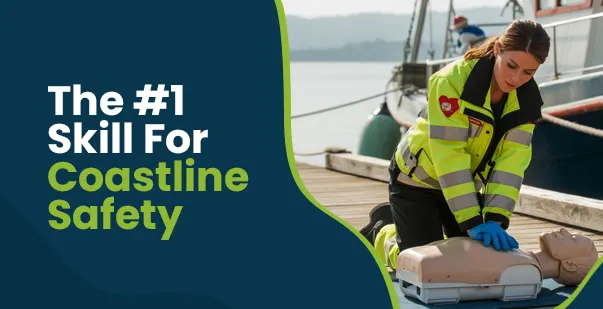
It was just after 6 a.m. at a small marina off the coast of South Carolina. A maintenance worker was climbing onto a docked vessel when he slipped, struck his head, and fell into the water. By the time his coworkers pulled him out, he wasn’t breathing. One of them, trained in CPR, kept compressions going until EMS (Emergency Medical Services) arrived, saving his life. Similar incidents have been reported in Alaskan fisheries, on Gulf oil platforms, and along the rugged Pacific Northwest coast, places where harsh conditions and delayed access to emergency care raise the stakes dramatically. It is a reminder that in remote or high-risk coastal settings, immediate response can mean the difference between tragedy and survival.
For thousands of workers across America’s coastal area, from Gulf oil rig crews to fisheries in Maine, medical help isn’t always around the corner. According to OSHA, any workplace more than a few minutes from emergency care must have trained responders on-site. On the water or along the shore, CPR and first aid training can be the one thing standing between life and death. So, read on to understand why these skills are important in coastal work environments!
Why Coastal Workers Need CPR and First Aid Training
If you work near the water on docks, marinas, fishing boats, or at the beach, you face safety risks that are different from inland jobs. The work environment is more hazardous, and emergency help can take longer to arrive. Workers across a wide spectrum of coastal industries face unique safety challenges, including:
- Shipyard workers
- Dock and port operators
- Marine biologists and researchers
- Commercial fishing crews
- Offshore oil and gas workers
- Lifeguards and water rescue personnel
- Harbor pilots and tugboat crews
- Coastal construction and maintenance teams
From research vessels to oil rigs, the need for immediate medical response is constant. According to OSHA standard 29 CFR 1915.87, “First aid services and supplies shall be readily available. If the facility is not in near proximity to an infirmary, clinic, or hospital, a person or persons shall be adequately trained to render first aid.”
– Occupational Safety and Health Administration
In high-risk coastal jobs, first aid training is not just helpful, it is essential. Here are a few reasons why that’s the case:
Higher Risk of Injuries and Deaths
Jobs in maritime industries come with a greater risk of getting hurt or killed. Between 2011 and 2017, marine terminal workers had a fatal injury rate of 15.9 per 100,000 workers each year. That’s five times higher than the average for all U.S. workers, according to the CDC.
Seafood processing workers had it even worse. Their injury rate was 6,670 per 100,000, the highest among marine-related jobs. These numbers show how dangerous coastal work can be.
Common injuries in these environments include:
- Falls on slippery decks and docks
- Crush injuries from heavy equipment or cargo
- Lacerations and amputations from processing machinery
- Hypothermia and cold stress from extended exposure to cold, wet conditions
- Musculoskeletal injuries from repetitive motion and heavy lifting
To put this in perspective, the construction industry, one of the most hazardous sectors in the U.S., had a fatal injury rate of about 10.2 per 100,000 in the same period, according to the Construction Financial Management Association. That makes certain coastal occupations, like marine terminal work, even more dangerous than construction, a field already known for its risks.
Delays in Emergency Response
In many coastal areas, getting medical help quickly isn’t easy. Geography, road access, and infrastructure often slow things down. Take Belleair Beach, Florida, for example. In some cases, ambulances there took up to 40 minutes to arrive. On the Oregon Coast, emergency crews in Tillamook County often report delays of 20–30 minutes due to winding mountain roads, frequent landslides, and limited EMS staffing. That’s far above the recommended 8-minute window for serious emergencies like cardiac arrest. When time matters, you may need to act before help gets there. Factors worsening EMS delays in coastal regions:
- Tides and Changing Water Levels: High tides can submerge access roads or docks, hindering ambulance access.
- Fog and Low Visibility: Dense fog can obscure visibility, delaying both land and air emergency services.
- Limited GPS and Communication Signals: Remote coastal areas may lack reliable GPS and communication networks, complicating navigation and coordination.
- Ferry-Only Access: Some islands or peninsulas are accessible only by ferry, which can significantly delay emergency response times.
Coastal Hazards You Should Know About
Coastal work brings environmental risks that you won’t always find elsewhere. Here are a few:
- Slippery Surfaces: Wet decks, piers, and boat ramps become slick quickly, especially during tide shifts or storms. Falls are a major risk.
- Unpredictable Weather: Strong winds, flash storms, and sudden lightning strikes can develop with little warning. Conditions can shift faster than weather alerts can catch.
- Saltwater Exposure: Saltwater wears down skin and gear. It causes rashes, infections, and equipment corrosion. Medical tools like AEDs or first aid kits need salt-proof casing or frequent checks.
- Marine Life Injuries: Contact with jellyfish, sea urchins, stingrays, or aggressive crustaceans can lead to painful stings, punctures, or even allergic reactions. Some injuries may get infected quickly due to warm, humid conditions.
- Electrocution Risks: Exposed wires, damaged dockside power boxes, or portable lighting near water raise the risk of shock. Saltwater worsens this by increasing conductivity.
- Hypothermia from Sudden Immersion: Falling into cold coastal waters, even in warmer climates, can rapidly reduce body temperature, especially with wind chill and wet clothing.
Safety Protocols and Protective Equipment
To reduce these risks, employers and workers should prepare with the right equipment and systems:
- Non-slip waterproof boots and grip gloves for traction and stability
- Marine-grade waterproof casings for AEDs and radios
- Daily weather tracking apps and posted forecasts on-site
- Regular equipment checks for corrosion, insulation damage, or salt buildup
- Insulated thermal blankets and dry suits for cold-weather response
- Training in marine first aid, including treatment for stings, shock, and hypothermia
- Signage warning of biological hazards in areas known for jellyfish or stingray activity
Training That Meets the Environment
CPR and first aid certification can be adapted for remote or high-risk locations through:
- Blended Learning Models: Online coursework paired with in-person skill evaluations, allowing flexibility in remote areas.
- Employer-sponsored Training: On-site training programs led by certified instructors, often tailored to specific environmental hazards.
- Ongoing Drills and Refresher Courses: Reinforce response readiness and identify gaps in emergency plans.
Why CPR Is a Core Skill in Coastal Caregiving?
Hands-only CPR chest compressions without rescue breaths have become a cornerstone of emergency response, especially in cardiac events where time is critical. In remote settings, where bystanders may not have full medical training or protective equipment, hands-only CPR offers a fast, effective response.
Just as important is training in how to operate an Automated External Defibrillator (AED), which can restore a normal heart rhythm in cases of sudden cardiac arrest. Many AED units are designed for easy use, but practice makes a difference, especially under stress.
Real-world examples show how important these skills are:
- In 2022, a fisherman in Bar Harbor, Maine, collapsed while unloading gear. A dockworker trained in CPR kept compressions going until EMS arrived 12 minutes later; he survived.
- On the Gulf Coast, a teenage lifeguard used an AED on a swimmer pulled from the water with no pulse. The swimmer regained a heartbeat before paramedics arrived.
It’s also important to distinguish between cardiac arrest and drowning.
- In cardiac arrest, hands-only CPR and AED use are the most effective immediate responses.
- In drowning cases, especially those involving children or cold water, rescue breaths are essential to restore oxygen after asphyxiation. In these situations, standard CPR (compressions plus breaths) is recommended.
Caregivers in coastal areas face environmental and demographic risks that make CPR training not just advisable, but essential. Here’s why:
1. Delayed Emergency Response in Remote Areas
Coastal and island communities often experience longer EMS response times due to distance, ferry-based transport, or under-resourced emergency services. In such cases, caregivers become the immediate responders. According to the National EMS Information System (NEMSIS), rural and remote communities consistently face longer EMS wait times, sometimes exceeding 15 minutes, well beyond the 4–6 minute window critical for brain survival during cardiac arrest.
Even a 10-minute wait without CPR can result in irreversible brain damage, making immediate action by bystanders essential. In remote environments where every minute counts, having trained personnel on-site isn’t just helpful, it is the only thing to save a life.
2. Increased Risk of Drowning and Water-Related Incidents
Drowning remains one of the leading causes of unintentional injury death globally, especially in coastal settings. Elderly or medically fragile individuals engaging in common activities like boating, coastal walks, or swimming are at heightened risk. The CDC reports that nearly 4,000 unintentional drowning deaths occur annually in the U.S., with coastal regions, including Florida, California, and Hawaii, showing higher-than-average drowning rates.
Even near-drowning incidents can be life-threatening, as individuals may suffer from secondary drowning, where inhaled water causes delayed respiratory complications hours after the event. This highlights the need for continued monitoring and medical evaluation even after a rescue appears successful
3. Vulnerable Populations in Coastal Communities
Coastal counties are home to a disproportionate share of aging adults. According to the U.S. Census Bureau, states like Florida, Maine, and South Carolina, major coastal regions, have some of the highest percentages of residents aged 65 and older. Older adults are more likely to suffer from conditions such as atrial fibrillation, hypertension, and heart failure, which increase the risk of sudden cardiac arrest.
In many of these communities, poor cellphone reception can make it difficult or impossible to call for help quickly, especially in isolated beach areas or near marshes and inlets. This communication gap further emphasizes the importance of having trained responders and emergency equipment already on-site.
4. Environmental Stressors Leading to Medical Emergencies
High humidity, heat waves, and salt-heavy coastal air can amplify the risk of heatstroke, dehydration, or respiratory events, particularly among elderly and chronically ill populations. A study in The Lancet found that coastal seniors are more likely to experience heat-related health events, especially when heat index values exceed 95°F. CPR is a vital response tool during heat-induced cardiac or respiratory arrest.
Additionally, salt-heavy air can act as an irritant, potentially triggering asthma attacks or other breathing difficulties, particularly in older adults and those with underlying respiratory conditions like COPD. In severe cases, these stressors can lead to cardiac or respiratory arrest, where CPR becomes a critical life-saving intervention while waiting for emergency services.
Common Concerns About Performing CPR
Even trained caregivers may hesitate when faced with a real-life emergency. Below are common fears, and the facts that help put them into perspective:
- “What if I hurt the person?”
In a cardiac arrest, the person is unconscious and has no pulse, meaning they are clinically dead. Performing CPR cannot make the situation worse. While chest compressions can sometimes cause rib fractures, these are treatable injuries and far less severe than the consequences of not acting at all.
- “I’m scared I’ll do it wrong.”
Perfect technique is not the goal; immediate action is. Even if compressions aren’t textbook, they still help maintain blood flow to vital organs. Delaying or doing nothing has far worse outcomes than attempting CPR to the best of your ability.
- “Could I get sued?”
In most U.S. states and many countries, Good Samaritan laws protect individuals who provide emergency aid in good faith. As long as you’re not grossly negligent or intentionally causing harm, you are legally protected for trying to help someone in distress.
- “What if I freeze or panic?”
Panic in emergencies is common, especially when the person in trouble is someone you care for. However, consistent coastal job safety training and refreshers build muscle memory. The more familiar you are with CPR steps, the more likely you are to respond instinctively and effectively when seconds matter.
- “Is mouth-to-mouth still required?”
No, for most adult cardiac arrest cases, hands-only CPR is now the standard recommendation by the American Heart Association. This method focuses on chest compressions only and has been shown to be highly effective, making it easier and more comfortable for people to take action.
- “What if they have COVID or another disease?”
This is a valid concern, especially in the wake of recent health crises. Fortunately, hands-only CPR significantly reduces the risk of disease transmission, as it avoids mouth-to-mouth contact. Using a mask and gloves, if available, can provide added protection. In life-threatening emergencies, the benefit of acting still far outweighs the risk.
First Aid Skills for Coastal and Outdoor Workers
Coastal workers face a variety of unique hazards, ranging from drowning and electrocution to marine bites and heatstroke. Thus, it is important to know how you can respond quickly and effectively to prevent minor injuries from becoming life-threatening emergencies. Below are the essential first aid skills and safety protocols for coastal environments:
CPR for Adults, Children, and Infants
If you work in a coastal area, you need to be ready for different emergencies. That includes knowing how to perform CPR on adults, children, and infants. For adults, use the 30:2 method, which involves 30 chest compressions followed by 2 rescue breaths. For children, the compressions should be lighter and may require only one hand. For infants, use two fingers to compress the chest gently but at the same rhythm.
| Age Group | Compression Depth | Hand Placement | Compression-to-Breath Ratio | Notes |
| Adult | At least 2 inches (5 cm) | Two hands, center of the chest | 30:2 | Full chest recoil between compressions |
| Child | About 2 inches (5 cm) | One or two hands, as appropriate | 30:2 (single rescuer)15:2 (two rescuers) | Lighter compressions, careful positioning |
| Infant | About 1.5 inches (4 cm) | Two fingers, just below the nipple line | 30:2 (single rescuer)15:2 (two rescuers) | Gentle compressions, avoid over-ventilation |
If someone is untrained, hands-only CPR is better than doing nothing. But in cases like drowning or breathing issues, full CPR, with rescue breaths, is more effective. These emergencies are common near water, so workers should know how to respond with both compressions and breaths.
This distinction is especially important for coastal workers, who are more likely to witness or respond to near-drowning events, slips off docks, or submersion injuries. Being prepared to deliver effective rescue breaths in addition to chest compressions can significantly improve survival outcomes in water-based emergencies.
First Aid Responses For Coastal Injuries
Working near water presents unique hazards that require specialized first aid knowledge. Some of the most common include:
- Jellyfish stings and marine bites – Rinse with vinegar (not fresh water), remove tentacles carefully, and seek medical attention for allergic reactions.
- Slip-and-fall injuries – Stabilize the person, check for head trauma or fractures, and avoid moving them unless necessary.
- Sunburn and heat exhaustion – Move the person to shade, hydrate, and apply cool compresses or aloe-based lotions.
- Hypothermia from cold water exposure – Remove wet clothing, warm the body gradually, and monitor for confusion or drowsiness.
Training for these scenarios ensures coastal workers can respond quickly and correctly, especially when professional help is delayed.
If you work in a coastal setting, it’s important to understand the risks and why CPR and first aid for outdoor workers matter. Here’s what makes first aid for coastal workers so important:
AED Use in Remote or Hard-to-Reach Areas
AEDs (Automated External Defibrillators) are life-saving devices. Every coastal site with a risk of cardiac arrest should have one. In remote areas where emergency services may take time to arrive, having an AED on-site becomes even more important. AEDs are easy to use. Most come with voice prompts that guide you step by step. Even if you haven’t used one before, these prompts make it simple to follow. Make sure AEDs are waterproof or stored in protective cases. Place them in a convenient location, and ensure that everyone on your team is aware of their whereabouts. In a cardiac emergency, even a few seconds matter.
Wound Care and Bleeding Control
Coastal jobs often involve sharp tools, slippery areas, and rough surfaces, all of which increase the chances of cuts, scrapes, or puncture wounds. Knowing how to stop bleeding quickly and safely is essential.
- Start by covering the wound with a sterile dressing and applying firm, direct pressure.
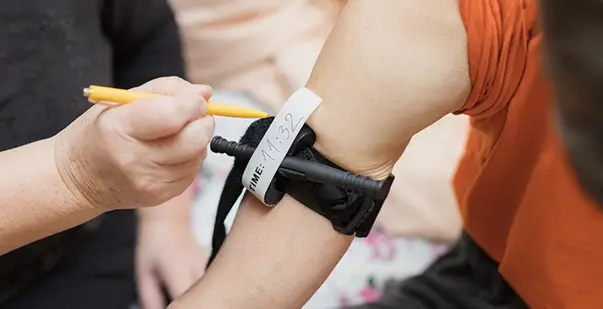
- If bleeding doesn’t stop, especially from a limb, you may need to use a tourniquet placed 2–3 inches above the wound.
- Use hemostatic gauze or bleeding control kits like Stop the Bleed in severe cases.
- Learn to recognize signs of life-threatening blood loss, or hemorrhagic shock: pale or clammy skin, rapid breathing, dizziness, and confusion. If a wound starts to show signs of infection, such as redness, swelling, warmth, pus, or increasing pain, seek medical attention.
- Make sure your tetanus vaccination is up to date. Coastal workers are more likely to suffer puncture wounds or scrapes that come into contact with soil, rusted metal, or contaminated water, all common sources of tetanus bacteria.
- Proper training can also help you respond with confidence, know when to escalate care, and take action before minor injuries become major problems.
Heat Exhaustion, Hypothermia, and Dehydration Control Actions
Working outdoors in coastal environments means dealing with sudden temperature shifts, hot sun, cool winds, and high humidity, all of which can lead to serious medical issues if not recognized early. The most common symptoms associated with each situation are:
| Condition | Common Symptoms | Immediate First Aid Actions |
| Heat Exhaustion | -Dizziness or lightheadedness- Nausea or vomiting-Heavy sweating and weakness | – Move to a shaded/sheltered area- Provide cool water or electrolyte drinks- Use wet cloths or fans to lower body temperature |
| Hypothermia | – Shivering- Slowed breathing- Slurred speech or confusion | – Move to a warm, sheltered area- Remove wet clothing- Wrap in blankets or dry clothing |
| Dehydration | – Dry mouth and lips- Fatigue or weakness- Confusion or disorientation | – Encourage slow sips of water or electrolyte drinks- Rest in a cool, shaded area |
Drowning and Water-Related Emergency Preparedness
Drowning is one of the biggest risks in coastal work. If someone is pulled from the water and isn’t responsive, check for breathing and a pulse right away. If there’s no pulse, begin CPR immediately, start with rescue breaths, then do compressions.
When water is involved, rescue breaths are especially important. That’s because the body often lacks oxygen in these cases. If the person is vomiting, turn them on their side to keep the airway clear. If there’s a chance of spinal injury (like from diving or impact), support the neck and avoid unnecessary movement. And always, remember to call emergency services ASAP, even during CPR.
Equipment-Related Injuries
Heavy tools, marine equipment, and power sources increase injury risk. When responding to equipment injuries, you can consider the following points:
- Electrical Burns: Turn off the power source, don’t touch the victim until safe, and cover burns with a sterile dressing.
- Crushed Fingers: Ice packs, elevate the hand, and transport for medical evaluation.
- Fish Hook Injuries: Stabilize or gently remove (if shallow), clean wound, and bandage. Seek care for deep or embedded hooks.
- Slips/Falls: Immobilize and check for head, neck, or spinal trauma before moving the injured person.
What to Include in a Coastal First Aid Kit?
First aid kits in coastal zones should go beyond the basics. Salty air, water exposure, and harsh sunlight create unique risks, so your supplies need to be rugged, waterproof, and well-stocked. Here are the essentials for a well-prepared coastal first aid kit:
- Waterproof bandages and adhesive tape for wet conditions
- Saline eye wash to flush out salt, sand, or debris
- Thermal blankets to treat shock or hypothermia
- Hemostatic gauze for bleeding control in remote areas
- Heat relief packets or cold packs to manage temperature-related illness
- Waterproof flashlight and signal flares for low-visibility emergencies
- Manual blood pressure cuff for quick vitals check without electronics
Customizing your kit for the environment increases the chance of effective on-site care, especially when professional help is delayed.
When Help Is Minutes Away, You Can Be the Difference!
That marina worker in South Carolina survived because a coworker didn’t freeze, they acted. In coastal environments, where emergency services may be delayed by 10, 15, or even 30 minutes, that kind of response isn’t just helpful, it’s critical. Whether you are a caregiver in a remote home, a deckhand on a fishing boat, or part of a marina crew, CPR and first aid skills equip you to step in when no one else can. However, even the best equipment or skill is only as effective as the people using it. That’s why up-to-date certifications and hands-on practice are critical in coastal environments, where emergencies often require immediate action.
The American Heart Association (AHA) recommends renewing CPR and First Aid certifications every 2 years. Coastal teams should also conduct annual emergency response drills and monthly checks of safety gear and first aid supplies. Moreover, workers can benefit from online refresher tools, many of which are mobile-friendly apps offering step-by-step guides, quick quizzes, and video demonstrations for CPR, AED use, and wound care. So, don’t wait for help, just enroll in a CPR course today! Gain the skills to act fast, stay calm, and save lives.