

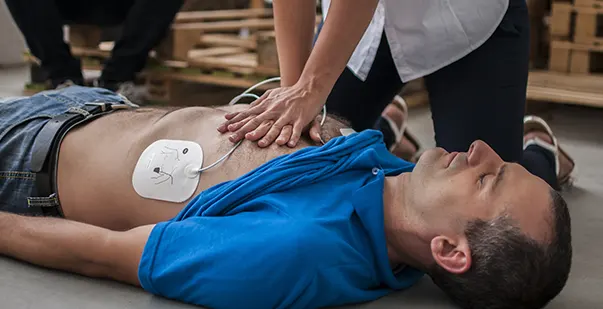
Every 40 seconds, someone in the United States has a heart attack (CDC, 2024). Moreover, about 70% of these victims die before reaching the hospital, according to the National Safety Council. Yet when someone collapses nearby, a friend, colleague, or loved one, few people know how to act. This is where Basic Life Support (BLS) training becomes important. It equips you to respond quickly and sustain life until medical help arrives. It also helps to know that a heart attack and sudden cardiac arrest are not the same.
A heart attack stems from blocked blood flow, whereas cardiac arrest occurs when the heart suddenly stops. BLS training prepares you to recognize both and act confidently when every second matters. So, what is BLS certification, and what will you learn from its training? Keep on scrolling to find out!
What Does BLS Stand for?
Before you learn what BLS Certification is, you need to know what it stands for. BLS stands for Basic Life Support. It is the immediate care given to someone in a life-threatening emergency. For example, cardiac arrest, choking, or severe breathing problems, until professional medical help arrives.
- The foundation of BLS grew from the early development of CPR in the 1960s. Since then, the International Liaison Committee on Resuscitation (ILCOR) has regularly updated the science behind these lifesaving steps.
- The American Heart Association (AHA) and the European Resuscitation Council (ERC) adapt the ILCOR updates for their regions to ensure that current training reflects the latest evidence.
- Modern BLS focuses on high-quality CPR, early use of an automated external defibrillator (AED), choking relief, and effective teamwork, key parts of the AHA Chain of Survival.
BLS training is open to everyone. Healthcare professionals usually take advanced-level courses. Whereas the public can enroll in CPR/AED or Heartsaver programs designed for non-clinical responders.
What is BLS Certification Training and Why is it Important?
Basic Life Support (BLS) certification gives you the skills to respond when a person’s breathing or heartbeat suddenly stops. The course follows current American Heart Association (AHA) guidelines.
During training, participants learn how to:
- Perform effective CPR for adults, children, and infants
- Use an automated external defibrillator (AED) safely and correctly
- Clear a blocked airway and assist someone who is choking
- Work as part of a team during a medical emergency
BLS certification builds readiness. You learn to assess situations quickly, stay steady under stress, and act with purpose until emergency responders take over. It is a valuable credential for healthcare and public safety roles, and equally meaningful for anyone who wants to be prepared to save a life.
Is BLS and CPR the Same Thing?
While closely related, BLS and CPR aren’t identical concepts. CPR focuses specifically on chest compressions and rescue breathing techniques. BLS training, however, encompasses CPR plus additional critical skills including AED operation, choking relief procedures, and coordinated team response protocols. Here’s how BLS differs from CPR,
| Aspect | CPR | BLS |
| Scope | Chest compressions and rescue breathing only | CPR + AED use + team coordination + advanced techniques |
| Target Audience | General public, family members | Healthcare professionals, workplace responders |
| Training Duration | 2-4 hours typically | 4-6 hours for comprehensive coverage |
| Equipment Training | Basic manikin practice | AED operation, bag-mask ventilation |
| Team Dynamics | Individual response focus | Multi-person coordinated response |
| Age Groups Covered | Usually adult-focused | Adult, child, and infant protocols |
| Professional Requirements | Rarely mandatory | Often required for healthcare employment |
Quick Takeaway: CPR is one key part of BLS, but BLS training prepares you to manage a broader range of life-threatening emergencies with advanced, team-based skills.
Read More: Difference Between Advanced Cardiac Life Support and Basic Life Support
What is Included in BLS Certification Training?
BLS courses cover the signs to quickly identify life-threatening events, and how to initiate the early administration of chest compressions, suitable ventilation, and other life-saving techniques. The following topics are covered when you enroll in the BLS certification program,
High Quality CPR
CPR is performed when a person’s heart has stopped beating. It involves chest compressions and rescue breaths to keep the oxygen flowing to the brain and other organs. Effective CPR depends on proper compression depth, rate, and ventilation technique, which vary by age group and are important for successful outcomes.
AHA Chain of Survival
The AHA Chain of Survival begins with recognizing the emergency to give someone the best chance of survival. Next comes immediate high-quality CPR to maintain blood flow until professional help arrives. This is followed by the use of an AED to deliver a shock and restore a normal heart rhythm, and finally, advanced medical care to ensure the best outcome. An AHA BLS course teaches you each of these steps, giving you the confidence to step up during emergencies.
Using an AED
An AED (Automated External Defibrillator)is a life-saving device that delivers a shock to restore a normal heart rhythm. AHA BLS training will teach you how to operate the device, the correct way to position the electrode pads, and how to follow the voice-guided instructions.
Effective Ventilation with Barrier Device
A BLS course with AHA compliance teaches you how to use the pocket masks and bag mask devices to provide safe and successful ventilation. The correct usage of the barrier device will prevent oxygen deprivation and reduce the risk of infection. However, if ventilation is performed too forcefully or too quickly, air can enter the stomach instead of the lungs. It can lead to a complication known as gastric insufflation. This may cause vomiting, aspiration, or decreased lung expansion, which further reduces the effectiveness of resuscitation efforts.
Relief of Airway Obstruction
Choking occurs when an object blocks the airway, making it difficult to breathe. An AHA BLS course teaches you to recognize the choking symptoms and provide proper first aid, like abdominal thrusts for adults and back slaps with chest thrusts for infants.
Opioid Overdose Response
BLS certification helps you recognize the signs of an overdose, including pinpoint pupils, unconsciousness, and respiratory issues. You will learn the appropriate medication, with the correct dosage to administer to reverse the effects of the emergency.
Teamwork Dynamics
AHA BLS courses teach you how to coordinate roles in multi-rescuer scenarios and take turns in performing chest compression to prevent fatigue. When you engage in proper teamwork, you can increase the survival rates.
Strong coordination also builds confidence under pressure. Each rescuer knows their role, trusts others to do theirs, and can adapt smoothly if the situation changes. This shared rhythm keeps performance steady even in high-stress moments.
Core of the EMS Systems
A Basic Life Support course walks you through how the Emergency Medical Services (EMS) network really works.
- It starts with a 9-1-1 dispatcher who triages the call and gives “pre-arrival” CPR instructions,
- Then, the first-in responders (often firefighters or law-enforcement officers) deliver initial BLS care,
- They hand the patient to paramedic ambulance crews for treatment en route, and finally transfer care to hospital staff in the emergency department.
This chain teaches two critical skills: how to activate the right resources fast and how your own BLS actions fit seamlessly into the larger continuum of pre-hospital care. It also clarifies when to stop care, specifically in situations:
- When advanced medical help takes over,
- When the person regains signs of life,
- When continuing care poses a danger to the rescuer.
Legal and Ethical Considerations
BLS certification training includes an overview of the legal and ethical factors of providing emergency care. You will learn about the legal responsibilities, including obtaining consent, and Good Samaritan laws, to protect yourself. The training will also emphasize maintaining patient confidentiality and acting responsibly.
Safety Precautions and Risk Management
Apart from helping others, BLS training teaches you how to protect yourself during emergencies. You will learn to reduce the exposure to infections, how to use PPE (Personal Protective Equipment), and ways to handle hazardous situations. These measures will help you maintain effective care without compromising on your safety.
Who Needs to Enroll in BLS Training?
Now that you know what a BLS certificate is, it’s time to find out who needs the credential. The certification is mandatory in several industries, especially if your role involves direct patient care or emergency response. Nonetheless, it is also valuable for other roles where you need to act quickly in an emergency. You need to sign up for the course if you belong to one of the following categories:
Healthcare Workers
BLS certification is mandatory for Doctors, nurses, paramedics, and other clinical staff. These professions use BLS skills regularly in intensive care units, emergency departments, and even during routine care, when patients have sudden cardiac arrest or respiratory failure.
Emergency Responders
Police officers, firefighters, and EMTs (Emergency Medical Technicians) also need BL training to respond to accidents, disasters, and other medical emergencies. Their quick intervention will initiate the chain of survival before the professional care reaches the emergency scene.
School Personnel
If you are a teacher, coach, administrative staff, or a school nurse, then you can stand out with BLS training. Educational settings also face medical emergencies in children through choking, allergic reactions, or sports injuries. In fact, many schools are in need of staff members with BLS credentials to ensure the safety of the students.
How To Get BLS Certified?
Getting BLS certification is simple. But you need to know the exact steps to complete the requirements successfully. Here’s the step-by-step guide to acquiring your BLS certification without any hassles.
Step 1. Choose an Accredited Training Provider
Select a course that issues an American Heart Association (AHA) BLS Provider Card or an American Red Cross Basic Life Support certificate. Both are valid for two years nationwide. Confirm that the provider is officially authorized by the AHA or Red Cross before registering. Compare class options: traditional classroom, blended online with in-person skills session, or online review, to find what fits your schedule.
Step 2. Complete Any Pre-Course Modules
Many AHA and Red Cross programs include short online lessons on key CPR concepts such as the adult/infant Chain of Survival. Finish these modules first. They shorten the face-to-face session and help you score better on your written test.
Step 3. Pass the Written and Practical Exams
- Written Test: 25–30 multiple-choice questions on CPR ratios, AED pad placement, and safety.
- Skills Test: Demonstrate adult and infant CPR, team rescue sequences, and AED use within the required time limits.
Instructors give immediate feedback and one retest if needed.
Step 4. Receive and Store Your Certificate
You’ll get an emailed PDF or digital card on the same day you pass. Save a copy and upload it to your employer’s credentialing portal. Set a reminder to renew every two years, or earlier if your employer or state licensing rules require it. Some systems send reminders automatically, but it’s best to track your own expiration date.
How to Prepare for Your BLS Certification?
Preparing ahead of time will reduce your exam anxiety and ensure a positive learning experience. Take a look at the best tips below for successful BLS certification preparation.
1. Pick the Right Training Format
Choose the type of class that fits your schedule and experience level:
- Instructor-led classroom: Best for beginners who want hands-on practice and direct feedback.
- Blended (online + in-person): Ideal if you need flexibility, complete lessons online, then attend a short in-person skills session.
2. Review the Basics Before Class
Read through the official study guide provided by your training center. Focus on:
- The steps of high-quality CPR for adults, children, and infants.
- How to use an AED (automated external defibrillator).
- What to do if someone is choking.
Try to understand both the “how” and the “why” of each step. A solid foundation will help you follow along more confidently during training.
3. Make a List of Questions
As you study, jot down anything you’re unsure about, like how deep compressions should be or when to switch rescuers. Bring your list to class and ask your instructor for clarification.
4. Learn Key Terms in Advance
Knowing a few common terms ahead of time makes it easier to follow lessons:
- Compression rate: How fast to press during CPR (100–120 per minute).
- Ventilation: Giving rescue breaths to deliver oxygen.
- Defibrillation: Using an AED to restore a normal heart rhythm.
5. Take Practice Quizzes
Before your class or exam, try online BLS practice tests. They’ll help you understand how questions are asked and highlight any areas you should review again.
6. Take Care of Yourself
A clear mind and rested body improve learning. The day before class:
- Get a full night’s sleep.
- Eat balanced meals and stay hydrated.
- Avoid heavy exercise or alcohol.
7. Form A Study Group
Learning with classmates can make the process easier and more engaging. Try role-playing emergency situations, like performing CPR on a manikin or calling 911, to reinforce key skills in a real-world context.
How Long Is BLS Certification Good For?
Basic certifications are valid for two years in the U.S. The validity period is common for AHA, Red Cross, and other nationally recognized bodies. The certification has an expiration date due to the following reasons:
- The guidelines for life support and emergency care are often updated based on scientific research.
- Life-saving skills, especially when they are not often used, can deteriorate over time.
- State licensing boards, accreditation organizations, and even healthcare facilities require their employees to remain updated on the BLS training. Having an expiration date drives you to sign up for a refresher course.
Read More: How Long Does a CPR Class Take?
Save Lives. Stay Certified. Stay Ready!
BLS certification provides essential skills for healthcare professionals while offering valuable emergency response capabilities for anyone committed to helping others during critical moments. When you learn what BLS training is, you can achieve enhanced career opportunities, professional credibility, and the invaluable ability to save lives. With proper preparation and commitment to ongoing skill maintenance, you can successfully obtain and maintain this crucial certification.
Don’t wait for tragedy to wish you had these life-saving skills. Enroll today in an accredited online BLS certification course and gain the confidence to act swiftly and save lives, anytime, anywhere.