

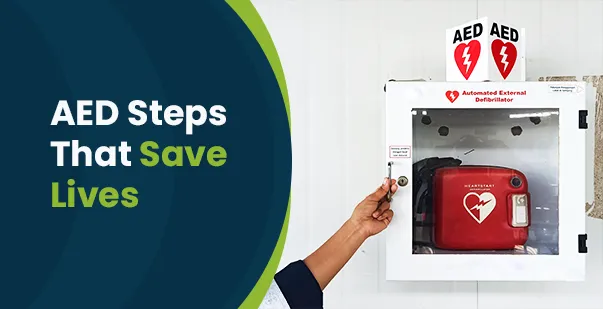
Cardiopulmonary resuscitation (CPR) is one of the best ways to revive victims of cardiac arrest. However, you cannot save everyone with this technique alone. Sometimes, you also need additional equipment to restart a normal heart rhythm. Among U.S. adults treated for out-of-hospital cardiac arrest (OHCA), survival to hospital discharge averages 9.1% when only chest compressions and rescue breathing are provided. This is where an automated external defibrillator (AED) comes in. However, you must know the correct AED steps to help the person and increase their chances of survival. In this guide, we will break down the steps for AED usage in the right order and also explain the importance of these devices in detail.
Why are AEDs Important?
When a person suffers from a cardiac arrest, their heart goes into a chaotic rhythm. According to the Sudden Cardiac Arrest Foundation, the chances of survival decrease by 7 to 10% for every minute that passes without defibrillation. That’s why many US states require AEDs in schools, gyms, and government buildings.
Early defibrillation can increase survival rates by up to 70% if used within the first 3-5 minutes. So, AEDs guide you with diagrams and voice prompts, making them simple for anyone to use. They are built for quick, intuitive use, which makes it possible for bystanders to become heroes.
Read More: CPR and First Aid in Coastal Work Environments: A Must-Have Skillset
Steps to Use an AED
Add infographic
You may find AEDs anywhere in public spaces. However, not everyone will know how to use these defibrillators correctly. This may often put the victim’s life at risk.
Here is a look at the AED steps in order to help you complete the procedure accurately.
Step 1: Ensure the Scene is Safe
Check your surroundings for hazards like traffic, fire, or water. Your safety comes first. Ask yourself the following questions after looking around:
- Is the environment safe for you and the person?
- Are there any immediate hazards, like traffic, fire, exposed wires, or water?
Your safety comes first when dealing with someone having a sudden cardiac arrest. If the scene is unsafe, do not proceed until help arrives or conditions improve. Rescuers who become victims themselves can’t provide effective aid.
Step 2: Check Responsiveness and Call for Help
Approach the person and gently tap their shoulder. Shout loudly, “Are you okay?” Look for any signs of consciousness. If the person doesn’t respond, shout for help and call emergency services right away. If others are nearby, assign someone the task of calling emergency services and another to fetch the AED. Be specific and address people properly, such as “You, in the blue shirt, call emergency and get an AED.” This helps reduce panic and increases the likelihood that people will respond appropriately. If you are alone and do not have a phone, retrieve an AED first if it’s nearby, or call emergency services before starting CPR.
Step 3: Check for Breathing and Pulse
If you are a trained responder, check their pulse and analyze if they are breathing after confirming the person is unresponsive. If you are a layman, check only for breathing. Tilt their head back gently to open the airway and look at their chest for movement. Listen for breathing sounds and feel for air against your cheek.
Sometimes the person may make gasping sounds, often called agonal breathing, which is not normal. If the person is not breathing or only gasping, begin CPR immediately.
Step 4: Begin High-Quality CPR
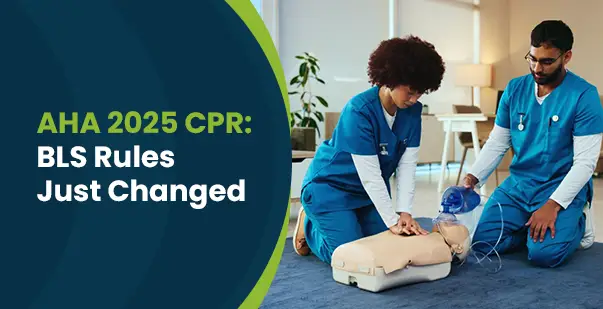
Position yourself beside the victim and start doing the chest compressions. Place the heel of one hand in the center of the chest and your other hand on top. Interlock your fingers. Start compressions at a depth of 2 inches (5 cm) for adults, at a rate of at least 100 to 120 compressions per minute. Allow full chest recoil after each compression and avoid leaning on the chest, as this is critical for effective circulation, especially during rapid compressions.
If you are trained and able, give 2 rescue breaths after every 30 compressions. CPR success rates are quite high if you use a barrier device. If not trained, continue with hands-only CPR until an AED is ready or emergency personnel arrive.
Step 5: Turn On the AED
As soon as the AED is available, turn it on. Depending on the model, power on the device. This may involve pressing a power button or lifting the lid in several cases. A few AEDs also auto-start when opened, so you need not look for any button in those devices. Once powered, the AED will provide verbal instructions and visual cues. Listen carefully to the prompts and follow them in the given order.
Step 6: Expose and Prepare the Chest
Cut or remove clothing to fully expose the chest. Sometimes, the chest may be wet because of sweat, rain, or other fluids, so dry it thoroughly. Moisture can interfere with pad adhesion and the shock.
If the person has a medication patch where the AED pad needs to go, remove it and wipe the area. If you find that the person’s chest is hairy, it’s best to shave the area before placing the pads. If no razor is available, a second set of pads may be used to remove the hair, but this method is not recommended and should only be considered as a last resort. Removing obstructions from the body is the key to providing shocks successfully with an AED.
Step 7: Attach the AED Pads
Peel the AED pads from their backing and place them on the chest as shown in the diagram. One pad should be placed just below the right collarbone. The other pad must be placed on the lower left side of the chest, just below the armpit. Make sure the pads are firmly attached to dry skin with no wrinkles or gaps.
If the victim is a child under 8 years old or weighs less than 25 kg (55 lbs), use pediatric AED pads if available. If pediatric pads are not available, you can also use adult pads, but make sure they do not touch or overlap. To ensure this, one pad can be placed on the center of the chest and the other on the child’s back (front–back placement).
Step 8: Allow the AED to Analyze the Heart Rhythm
The AED will easily assess the victim’s heart rhythm. Stand clear and do not touch the person during this process. Say it loud for everyone nearby so that they give some space for the AED to work. The device will announce: “Analyzing rhythm. Do not touch the patient.” Everyone, including you, must stay clear to avoid interfering with the reading.
Step 9: Deliver a Shock (If Advised)
If the AED determines that a shock is needed, it will advise you to press the shock button. Before doing so, loudly say “Clear!” to ensure that no one is touching the victim.
Once the area is clear, press the shock button as prompted. The AED will deliver an electric shock to the heart. Be alert and wait for further instructions from the AED. Please note that a few AEDs deliver shock immediately, while others often need manual button pressing. So, always check which type you are using.
Step 10: Resume CPR Immediately
After the shock is delivered (or if no shock is advised), the AED will instruct you to resume CPR. Begin with chest compressions and follow the 30:2 compression-to-breath ratio.
Continue CPR for about 2 minutes (or 5 cycles) before the AED prompts another rhythm analysis. Don’t remove the pads or turn off the AED because it will mostly remain active and continue guiding you. Minimize your pauses between shocks and compressions to improve survival chances.
Step 11: Repeat the Cycle Until Help Arrives
You must continue the cycle of CPR, AED analysis, and shocks (if advised) until the person shows signs of life (like breathing or movement) or professional emergency responders arrive and take over.
The same steps also apply if you are physically unable to continue or the AED advises stopping. These devices are designed to work continuously and adjust based on the victim’s condition.
Read More: CPR in Space: Training Astronauts for Zero-Gravity Emergencies
Common Mistakes to Avoid When Using an AED
Even though AEDs are built for simplicity, there are some common mistakes you should be aware of, as mentioned below:
Forgetting to Turn on the AED
Many people also panic and forget to turn on the device during emergencies. Remember, powering it on is what activates the instructions. So, make sure your AED is switched on when giving rhythmic shocks to revive the victim.
Not Saying Clear! Before Shock
Always say “Clear!” and ensure no one is touching the victim before pressing the shock button. If you do not say so, the place may be crowded and also hamper the already deteriorating health of the person.
Incorrect Pad Placement
Wrong pad placement can result in an ineffective shock. Always follow the diagram on the pads. If you are unsure, call emergency services and ask them for proper instructions so that you do not misplace the pads.
Not Resuming CPR
People often wait to give CPR after the shock is delivered. However, you should not stop in such cases and resume CPR immediately as instructed by the AED. Following the correct steps for using an AED helps revive the victim as soon as possible without putting their life at risk.
Ignoring AED Prompts
Not listening to the AED’s instructions properly can impact the health of the victim in an emergency. Remember that the device is designed to guide you step by step. Hence, make sure to follow its prompts closely without hesitation.
Using an AED on a Wet Surface
Water conducts electricity, so placing or shocking a victim on a wet surface can endanger both the patient and rescuers. Always move the victim to a dry area and quickly wipe the chest before applying the pads.
Workplace Training Requirements in the U.S.
While AEDs are simple to use, training boosts confidence and helps reduce hesitation in emergencies. Here are some key points to know regarding the requirements:
OSHA Guidance
OSHA does not make AED training mandatory for all workplaces but strongly encourages it, especially in industries with higher health risks. Many employers include CPR + AED training in their OSHA-compliant emergency response plans.
Certified Courses
Employees can take certified CPR + AED training through the American Red Cross, American Heart Association, or other accredited providers.
Practice Devices
Practice with a training AED device, which is usually available online or through local Red Cross chapters. This can help you easily simulate real-life emergencies.
Know AED Locations
Familiarize yourself with AEDs already installed in common spaces such as workplaces, gyms, malls, airports, and schools. Quick access can make all the difference in saving lives.
Workplace Preparedness
Ask your employers to train designated staff, conduct regular emergency drills, and ensure AEDs are maintained and accessible.
Get Certified and Learn the Steps to Use an AED
AEDs are designed for everyday people, not just doctors. The key is acting fast and following the steps. To gain confidence, take a certified CPR/AED course today. Remember, the first step in using an AED is turning it on and following its prompts. Trust the device. Trust the process. And most importantly, take action.
You can be the reason someone survives a sudden cardiac arrest if you know the correct steps to use an AED. If you want to learn how this quick response can save a life, enroll in the CPR/AED course now.