



Most people feel uncertain about the right first step when facing severe bleeding, and that confusion often leads to hesitation. The real question involves recognizing when pressure is enough and when bleeding demands stronger control. Recent Red Cross First Aid Guidelines offer clearer direction by emphasizing that direct pressure should come first for most limb injuries, with a tourniquet used only when bleeding is life-threatening or not controlled through pressure alone. Therefore, the real decision between a tourniquet vs direct pressure depends on the speed and severity of the bleed, not guesswork.
This guide explains the correct decision-making steps, how each method works, and common mistakes to avoid. You will also learn the differences between a tourniquet and bleeding control in detail.
What is a Tourniquet?
A tourniquet is a medical device that helps you put enough pressure on a body part to stop blood from flowing past it and stop severe bleeding. These devices are often a part of routine care in medical settings, such as surgeries. Usually, tourniquets are considered to be a lifesaving treatment for severe blood loss.
Severe blood loss or hemorrhage is a life-threatening medical emergency. If a person loses too much blood, they can go into shock. The first step is to stop bleeding by putting direct pressure on the wound with a clean cloth or gauze until it stops. However, this may not be possible in every situation, like:
- The bleeding is too severe and won’t stop under direct pressure
- The bleeding is happening from multiple places
- The injury is in a place (e.g., torso) that you cannot usually press on
- The bleeding is from an amputation (where a body part is almost or totally removed)
In these cases, first responders may also use tourniquets in mass casualty events. Sometimes, they may also use a tourniquet as a temporary measure to buy some time while they do cardiopulmonary resuscitation (CPR) or other critical lifesaving treatments.
What is Direct Pressure or Pressure Dressing?
Direct pressure is the simplest and an effective first step for most external bleeds. It involves pressing firmly on the wound with clean gauze or cloth to slow and stop the bleeding. The amount of pressure needed depends on the severity and location of the injury, but heavy bleeding from a larger vessel usually requires strong, steady pressure.
A pressure dressing is applied after direct pressure has brought the bleeding under control. It uses a bandage or wrap that maintains pressure on its own, so an EMT or bystander does not have to keep holding the wound during transport. A pressure dressing should never replace direct pressure during active, uncontrolled bleeding; it only secures the wound once bleeding has slowed or stopped.
Why is it Important to Understand Bleeding Control?
Before jumping into each method, it’s important to understand that bleeding control follows a simple, structured escalation:
- Start with firm, direct pressure.
- Move to a pressure dressing or hemostatic gauze wound packing if direct pressure alone isn’t enough.
- Apply a tourniquet only when the bleeding involves an extremity and is truly life-threatening.
This hierarchy exists because direct pressure and pressure dressings are safe, effective, and appropriate for most bleeding situations. A tourniquet, while lifesaving, is reserved for specific, catastrophic bleeding that cannot be controlled through normal means.
Tourniquet vs Direct Pressure vs Pressure Dressing: Key Differences
Tourniquet, direct pressure, and pressure dressings are three escalating methods used to control external bleeding, each appropriate for different levels of severity. Understanding how they differ helps responders choose the safest and most effective intervention during an emergency.
Here’s a clear comparison:
| Method | When to Use | How It Works | Pros | Limitations |
| Direct Pressure | First response for most bleeding | Firm hand pressure compresses vessels to slow and stop bleeding | Simple, fast, and effective for most wounds | Not ideal for spurting arterial bleeding; requires hands-on contact |
| Pressure Dressing | When bleeding is mostly controlled but needs hands-free compression | Layers of gauze + tight wrapping maintain steady pressure | Frees hands, provides consistent pressure | May fail with heavy arterial bleeding; must be applied correctly |
| Tourniquet | Life-threatening extremity hemorrhage, amputation, spurting blood | Completely occludes arterial flow to stop bleeding | Fastest way to control massive limb bleeding | Only for limbs; must be applied tightly; painful and needs reassessment |
When Should You Use Direct Pressure?
Direct pressure is the primary and most reliable initial method to stop bleeding. It works by pressing the blood vessel against the underlying tissue, allowing clots to form and reducing the flow.
Here are some life-threatening bleeding control steps to follow when applying direct pressure:
- Use a clean cloth, gauze, or even a shirt if nothing else is available.
- Place both hands over the wound and apply firm, continuous pressure.
- Do not remove the cloth to “check” the wound — this disrupts clot formation.
- If the cloth becomes soaked, apply more layers on top; don’t pull it off.
When direct pressure works best:
- Minor to moderate bleeding
- Shallow cuts
- Wounds on the torso, neck, or areas where a tourniquet cannot be applied
- Slow oozing or steady bleeding rather than spurting
When Should You Transition to Pressure Dressing?
If you cannot maintain constant hand pressure or the wound continues to ooze after initial control, a pressure dressing becomes the next step. A pressure dressing is simply a layered dressing wrapped tightly enough to maintain pressure on the wound without needing hands-on contact. It frees your hands for other tasks and provides steady compression.
Here’s when you should know that a pressure dressing is enough:
- Bleeding slows significantly with initial direct pressure
- Bleeding is not spurting or soaking through rapidly
- You need your hands free for airway management, calling 911, or assisting others
How to Build Proper Pressure Dressing?
Knowing the difference between a tourniquet vs direct pressure is not enough. You must also know when, where, and how to build a proper pressure dressing in emergencies. Here are some important considerations:
- Keep your initial gauze or cloth in place and don’t remove it.
- Place additional folded gauze or fabric on top to increase pressure.
- Wrap a bandage, elastic wrap, cravat, or cloth tightly around the limb or body part.
- Secure the dressing so that it does not slip.
- Reassess frequently for breakthrough bleeding.
Here are some pressure dressing mistakes to avoid during these circumstances:
- Wrapping too loosely
- Removing layers to “inspect” the wound
- Wrapping circumferentially on areas that may restrict breathing (e.g., rib cage)
- Never cover the tourniquet because the responders need to see it
- If bleeding continues to soak the pressure dressing or pulses through it, move to the next level immediately.
When to Apply a Tourniquet?
A tourniquet is reserved strictly for life-threatening extremity bleeding on arms or legs that is massive, uncontrolled, or rapidly fatal. You must also know when to use this tool to avoid improvised tourniquet risks. Use a tourniquet immediately if you see:
Spurting Arterial Bleeding
Bright red, pulsating spurts indicate arterial involvement. This is extremely dangerous and requires rapid tourniquet application.
Blood Soaking Through Dressings Instantly
If direct pressure cannot control it, or if pressure dressings are failing, escalate to a tourniquet right away.
Traumatic or Partial Amputation
Any complete or near-complete limb loss requires a tourniquet without delay.
Scene Safety Issues
If you cannot safely stay and maintain pressure, apply the tourniquet rapidly and move the victim to safety, such as in traffic accidents, fire hazards, and active threats.
Time-critical Emergencies
If maintaining pressure would delay lifesaving evacuation, use a tourniquet to gain immediate control.
How to Apply a Commercial Tourniquet the Right Way
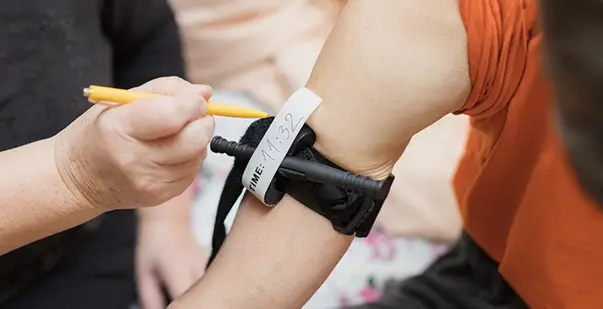
A properly applied tourniquet must stop arterial flow completely. If applied incorrectly, it will not stop the bleeding and may worsen shock. Here is a step-by-step guide to help you with the process:
- Place the tourniquet 2 to 3 inches above the wound, but not on a joint.
- Position it high enough to capture the artery, but not unnecessarily high unless visibility is poor.
- Pull the strap as tight as possible before twisting the windlass.
- Twist the windlass until bleeding stops completely.
- Secure the windlass in place.
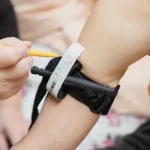
- Mark the time clearly on the tourniquet or the person’s skin.
Basics of Hemostatic Gauze and Wound Packing
Hemostatic gauze uses agents such as kaolin or chitosan to accelerate clotting. This method often controls severe bleeding when direct surface pressure is not enough. It is especially useful for:
- Deep wounds
- Gunshot wounds
- Knife injuries
- Junctional bleeding
- Groin or armpit trauma
- Non-compressible hemorrhage
Here is a step-by-step guide for using hemostatic gauze:
- Expose the wound.
- Locate the source of bleeding deep inside.
- Push hemostatic gauze firmly into the cavity.
- Pack tightly until the wound is filled.
- Apply strong direct pressure for several minutes.
Real-World Scenarios: Choosing the Right Bleeding Control Method
Here are practical examples showing how to choose correctly in a chaotic scene.
1. Power Saw Accident (Arm Laceration with Spurting Blood)
Correct Choice: Tourniquet
Spurting arterial bleeding cannot be slowed with a pressure dressing alone.
2. Road Traffic accident (Deep Leg Cut, Steady Bleeding)
Correct choice: Direct pressure and pressure dressing
If bleeding slows with pressure, a tourniquet isn’t needed.
3. Workplace Machinery Incident (Partial Amputation)
Correct choice: Immediate tourniquet
Massive hemorrhage won’t respond to pressure alone.
4. Gunshot Wound to the Torso
Correct choice: Hemostatic gauze, wound packing, and direct pressure
Tourniquets will not work on the chest or abdomen.
5. Range Accident (Arm Gunshot Wound with Deep Cavity)
Correct approach: Hemostatic packing, direct pressure, and a tourniquet if still uncontrolled
Packing may stop deep bleeding before a tourniquet becomes necessary.
Tourniquet vs Direct Dressing: Use the Right Tool to Save a Life
Stopping severe bleeding is always about choosing the right tool at the right time. Direct pressure generally remains the foundation of bleeding control. Pressure dressings and hemostatic gauze can easily extend that control when you need more hands-free stability. Tourniquets, on the other hand, are lifesaving, but only when used for massive extremity hemorrhage.
Understanding the differences between tourniquet vs direct dressing ensures that you can act quickly, confidently, and effectively during an emergency. Want to learn more about these tools and techniques? Enroll in a first aid course offered by the American Health Care Academy (AHCA).
FAQs
1. When should I not use a tourniquet?
Tourniquets work only on limbs. They cannot be used on a torso, chest, abdomen, groin (junctional areas), neck, or head. These areas contain large internal vessels and no structure for a tourniquet to compress against.
2. Why should you document time when using tourniquets?
Tourniquets can remain safely in place for hours, but emergency medical services (EMS) must know how long it has been used to plan transport and medical care. That is why you must always document time when using these tools.
3. What are the common mistakes that people make during bleeding control?
Common mistakes include not applying firm, continuous direct pressure on the wound, or repeatedly lifting the dressing to “check” the bleeding, which breaks forming clots and worsens blood loss. Another serious error is using a tourniquet too early or placing it incorrectly, instead of reserving it for life‑threatening bleeding that does not respond to direct pressure.