Bing Ads
Home » Healthcare CPR/AED & First Aid Combo » Adult CPR – Put it Together
Healthcare-cpraed-first-aid-combo-img-eng
Healthcare-cpraed-and-first-aid-combo-mob-img

Healthcare CPR/AED & First
Aid (BLS) Combo

Our healthcare CPR and First Aid course includes Adult, Child & Infant CPR and First Aid training. Receive your combo course certificate on your registered email ID. Read More Our course curriculum is comprehensive and rich in quality. It includes easy to learn and implement instructions designed by OSHA experts. Read Less
(111,773 reviews with 4.8 stars)
$36.95 $39.90
ChaptersCE CreditsValidityCostDurationECCExam AttemptsWallet Card
256.02 Years$36.951-2 HrsCompliantUnlimitedDownload/Print/Mail
  • Chapters25
  • CE Credits6.0
  • Validity2 Years
  • Cost$36.95
  • Duration1-2 Hrs
  • ECCCompliant
  • Exam AttemptsUnlimited
  • Wallet CardDownload/Print/Mail

Select Course

Chapter 6: Using an AED

An Automated External Defibrillator (AED) can help restore a normal heart rhythm.

Use it as soon as it becomes available.

  1. Turn it on.
  2. Follow the voice prompts.
  3. Expose and dry the chest.
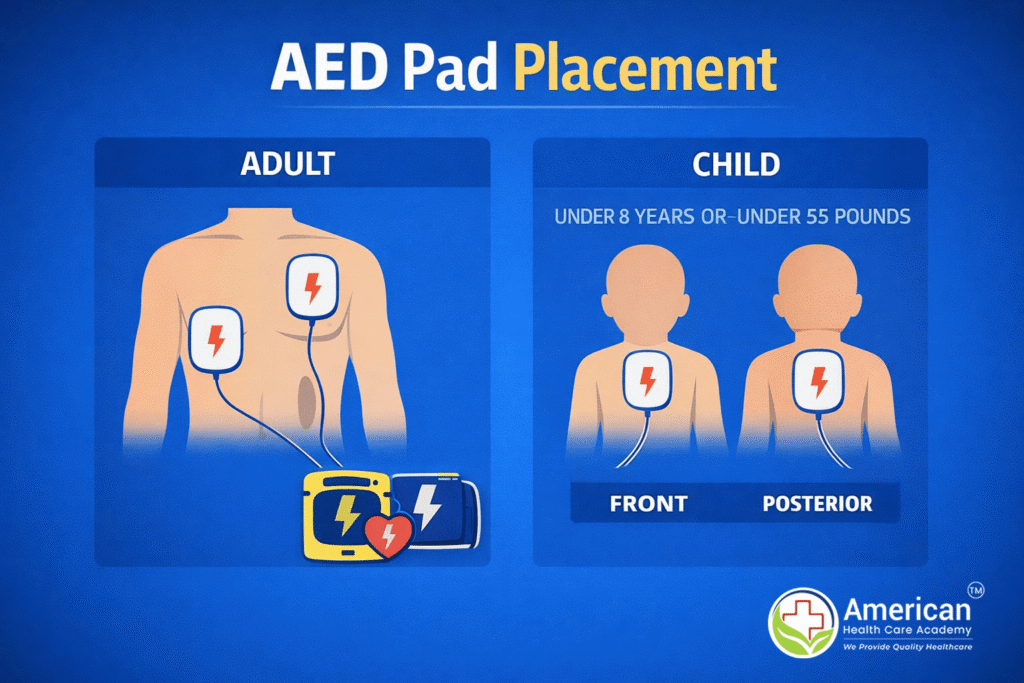
  4. Apply pads as shown.
  5. Do not touch the person while the AED analyzes.
  6. If a shock is advised, make sure everyone is clear and deliver the shock.
  7. Resume CPR immediately after the shock — or if no shock is advised.

Aed-pad-placement

Important:

  • Move the person away from water and dry the chest.
  • Remove medication patches.
  • Place pads away from visible pacemakers.
  • Ensure pads stick to dry skin.
  • If the person is wearing a bra, you may adjust or move it enough to place the AED pads on the bare chest instead of fully removing it.
  • For children under 8 years old or under 55 pounds, use pediatric pads if available.
  • If pads may touch, place one pad on the chest and one on the back.
  • AEDs may be used on infants if no manual defibrillator is available.

If no AED is available, continue CPR.