Bing Ads
Home » CPR/AED, First Aid & Bloodborne Pathogens Combo » Adult CPR: Airway and Breaths
Cpraed-first-aid-combo-img-eng
Cpraed-first-aid-and-bloodborne-pathogens-combo-mob-img

CPR/AED, First Aid &
Bloodborne Pathogens
Combo

Our CPR/AED and First Aid for Nervous System Emergencies combo course includes training in Adult, Child and Infant CPR, First Aid and Bloodborne Pathogens certification. The CPR/AED and First Aid certification is valid Read More for 2 years and the Bloodborne Pathogens certification is valid for 1 year, per OSHA guidelines. The course also includes a free printable wallet card. Read Less
(111,773 reviews with 4.8 stars)

$49.95 $59.85

Chapters CE Credits Validity Cost Duration ECC Exam Attempts Wallet Card
31 2 Years $49.95 2 Hrs Compliant Unlimited Download/Print/Mail
  • Chapters31
  • CE Credits
  • Validity2 Years
  • Cost$49.95
  • Duration2 Hrs
  • ECCCompliant
  • Exam AttemptsUnlimited
  • Wallet CardDownload/Print/Mail

Select Course

Chapter 5: Adult CPR – Airway and Breaths

After 30 compressions:

Open the Airway

  • Use the head-tilt, chin-lift technique.
  • Tilt the head back slightly.
  • Lift the chin.

The tongue is the most common airway obstruction in an unresponsive person.

If you see something clearly blocking the airway and it is easy to remove, remove it. Do not perform blind finger sweeps.

Give Breaths

  • Pinch the nose closed.
  • Seal your mouth over theirs.
  • Give 2 breaths.
  • Each breath should last about 1 second.
  • Watch for the chest to rise.

If the chest rises, the breath is effective.

If the chest does not rise:

  • Reposition the head.
  • Try again.
  • If still no rise, return immediately to compressions.

Give just enough air to make the chest rise. Avoid giving large or forceful breaths.

Continue 30:2 cycles until:

  • An AED is ready
  • EMS arrives
  • The person begins breathing normally
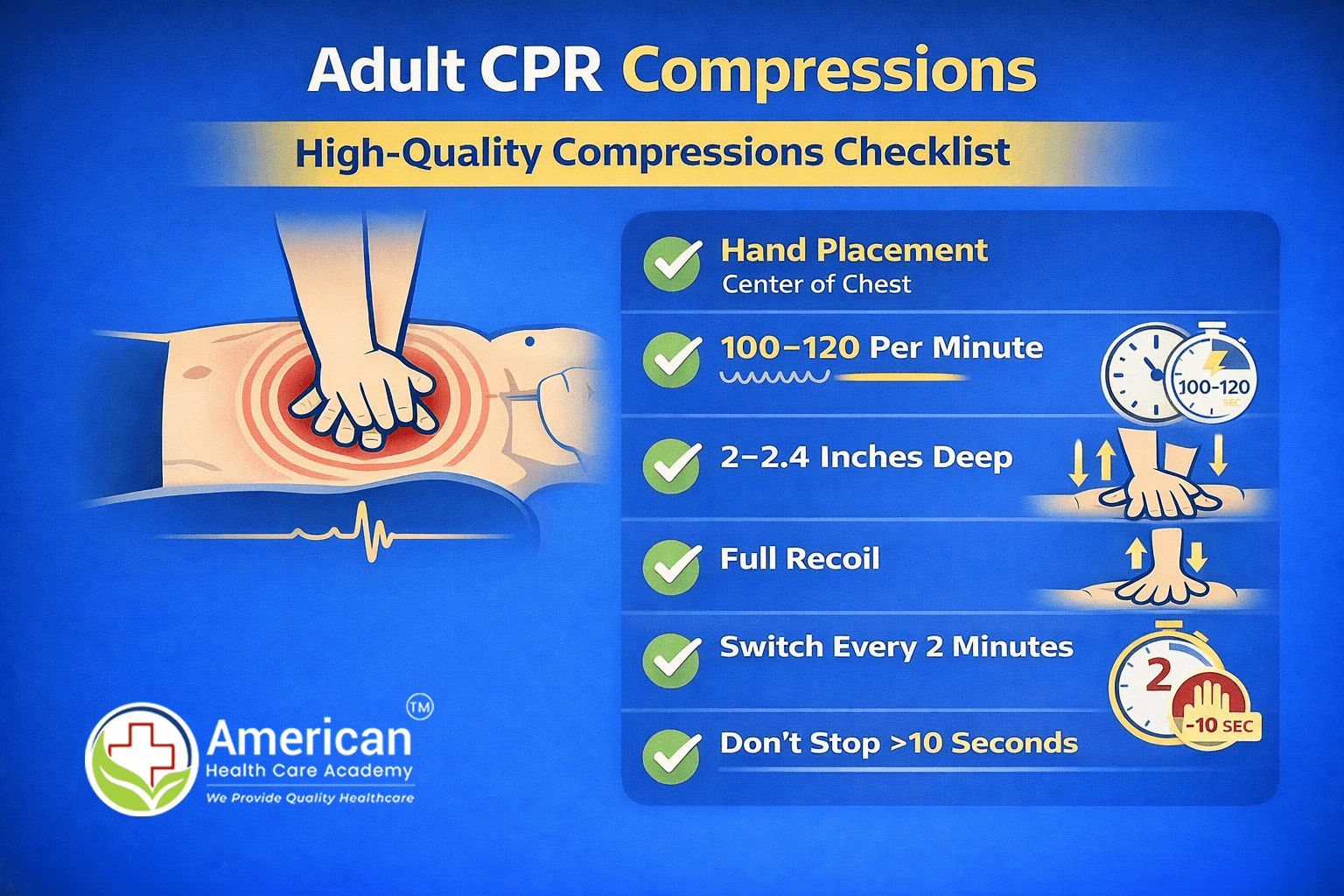
Adult-cpr-compressions

Recovery Position

If the person starts breathing normally:

  • Roll them onto their side.
  • Support the head and neck.
  • This helps prevent choking if vomiting occurs.
  • Monitor breathing until EMS arrives.